The task sheet lands in week two. The due date is somewhere in week seven. The document you open that afternoon is called "Untitled". Everything that happens between those two points is invisible to you while you are living it and completely visible to your marker at the end of it. This is a plan for the whole run, from the day the task sheet is handed out to the morning you press submit, and the one decision it is really built around is where your draft sits.
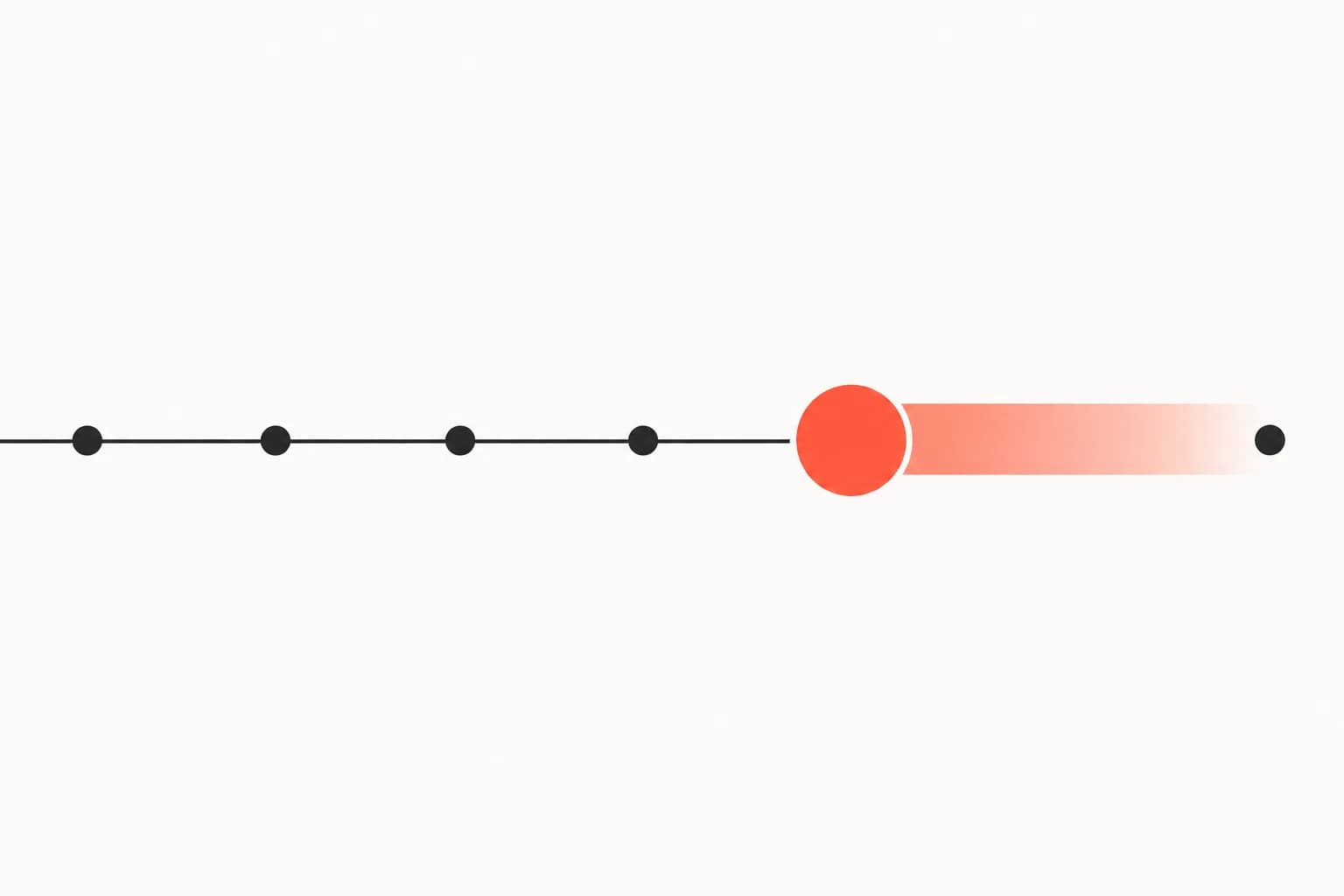
The draft date is the decision that matters
Most students do get feedback on an internal assessment. Most of them get it too late for it to change anything. That is the failure this timeline exists to prevent, and it is not a failure of effort. A student who hands a draft in with two days left has worked just as hard as one who hands it in with two weeks left. They have simply spent their effort at a point where feedback can no longer reach the marks.
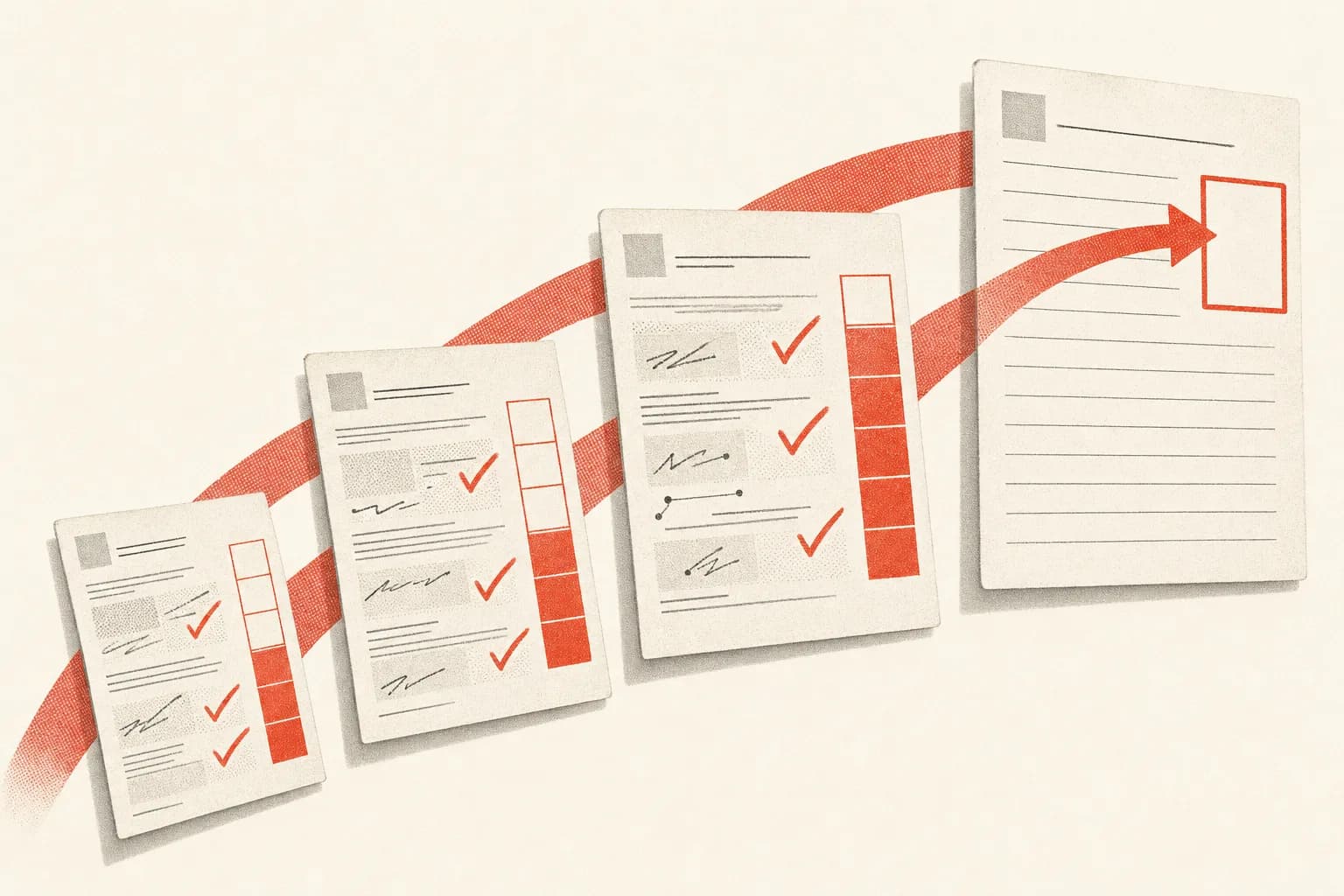
Think of feedback as having a shelf life measured in the time you have left. With two days remaining, a comment can fix a citation, a heading, a sentence that does not parse. With two weeks remaining, the same comment can move a whole section, replace an argument that never worked, or add the analysis a criterion was quietly asking for. The comment is identical. What changes is whether you can act on it, and the criteria that carry the most marks are almost always the ones that need the most time to fix.
This is also what the QCAA itself asks of feedback. Its guidance on integrating learning and assessment describes effective feedback as related to the standards and descriptors and timely, so that students can act on it and adjust their learning. Our article on feedback before summative assessment sets out that guidance and what draft feedback can and cannot contain. The planning consequence is simple: the draft date is not an administrative box. It is the last point at which your result is still genuinely movable.
Week by week, from task sheet to submission
Below is the shape of a typical four-to-five week internal assessment. The dates are editorial advice, not policy, so slide them to fit your own task, your subject and how many other pieces are due in the same fortnight. What should not slide is the order, because each stage depends on the one before it.
- Task sheet day
Read the task sheet and the ISMG in the same sitting, before you have any ideas you are attached to. Highlight the cognitive verb in the task statement. Write down the due date, the draft date and the response length, and put all three somewhere you will see them.
- Four weeks out
Decide what you are actually arguing, investigating or testing, and check that decision against the top band of every criterion. This is the cheapest week to change your mind, and the only week where changing it costs you nothing.
- Three weeks out
Gather. Sources, data, evidence, quotations, whatever your subject runs on. Keep the reference details as you go rather than reconstructing them later. End the week with an outline where each section is labelled with the criterion it is there to satisfy.
- Two weeks out
Write the messy full version. Not a polished half. A complete, ugly, whole-of-task draft is worth far more than three perfect paragraphs, because feedback can only comment on what exists.
- One week out
Submit the draft. Then leave it alone for a day, and use the wait to check the mechanical things that never need feedback: length, referencing, formatting, appendices.
- Final week
Act on the feedback, one criterion at a time, hardest first. This is where the mark actually moves. Stop revising structure about two days out and switch to reading and checking.
- Submission day
Final read, final file, correct upload. Nothing structural. If you have run this timeline, today should be boring, and boring is the goal.
The first afternoon: read before you write
The single most common way to lose marks on an internal assessment is to write a competent response to a slightly different question than the one you were set. It happens in the first hour, and it is invisible until the marks come back. Three steps on the first afternoon prevent it, and together they take about forty minutes.
-
Decode the cognitive verb
Every QCAA task statement turns on a cognitive verb, and each verb has a defined meaning that sets the kind of thinking the marker is looking for. Evaluate is not describe. Analyse is not explain. Getting this wrong caps your mark no matter how well written the rest is, so look yours up in the guide to QCAA cognitive verbs and write its definition at the top of your document.
-
Read the top band first
Open the ISMG and read the highest band of each criterion before you read anything else. That row is the description of the piece you are trying to write. Reading the middle bands first anchors you to a safe, mid-range response and you will unconsciously write towards it. Our guide to reading an ISMG walks through how the descriptors differ from band to band.
-
Map the criteria onto sections
Sketch the shape of your response and write beside each section which criterion it exists to satisfy. Any section that answers no criterion is a section you are writing for free. Any criterion with no section attached is the one you are about to lose marks on. This map takes ten minutes and survives the whole task.
Work backwards from the draft date
Once you know the draft date, the rest of the schedule is arithmetic rather than willpower. Put the complete rough version far enough before the draft date that you are handing in something whole. Put the draft date far enough before submission that you have a clear working week afterwards. Everything else fits around those two anchors.
The gap after the draft is the part students shorten first and regret most. Feedback that arrives on Tuesday for a Thursday due date can only be applied to the surface of your work. The same feedback with six days behind it can be applied to its structure. A day of distance between finishing a draft and revising it also does real work on its own, because you start reading what you wrote rather than what you meant, which is the point our article on why drafts matter before submission makes about revision cycles.
Be honest about your own estimates while you are doing this arithmetic. Students routinely predict finishing dates they then miss, including the dates they nominate as their worst case. Plan against the version of you who is slower than expected, and the draft still lands on time.
What to do when the feedback lands
Feedback arriving is not the same as feedback working. The final week is where the timeline pays out, and the way to spend it is narrow rather than broad.
- Read every comment once, then close the document and come back an hour later.
- Sort the comments by criterion, not by page order, so you can see which criterion is carrying the most problems.
- Start with the criterion furthest below where you want it, not the one that is easiest to fix.
- Make one substantial change well rather than twelve small changes everywhere.
- Ask for clarification on any comment you cannot restate in your own words.
- Stop structural work two days out, whatever state it is in.
One deep change beats a broad sweep because bands are described by the quality of your thinking, not by the number of corrections you made. Our guide to moving a draft up a mark band covers what that single targeted change usually has to be.
The last days belong to checking
By the final forty-eight hours the timeline has done its job, and the work changes character completely. You are no longer improving the response, you are protecting it: checking that the file is the right one, that the referencing is complete, that the length is inside the limit, that the thing you uploaded is the thing you meant to upload.
That final stretch has its own rules and its own evidence behind them, and we have written it up separately. When you get there, follow the night-before submission checklist rather than improvising. The advantage of running the timeline properly is that the last night becomes a short, calm one instead of the whole assignment compressed into a single evening.
Key takeaways
An internal assessment timeline is not about starting early for its own sake. It is about arranging the weeks so that feedback arrives while you can still act on it, and so the final days need nothing but checking.
- Read the ISMG and the task sheet on day one, before you have ideas you are attached to.
- Decode the cognitive verb and write its definition into your document.
- Find your school's drafting policy in week one and treat the draft date as a real deadline.
- Hand in a complete rough draft rather than a polished fragment.
- Leave a full working week between draft feedback and submission.
- Spend the final week on one criterion at a time, hardest first.
- Keep the last two days for checking, not for rebuilding.
Plan your next assignment with ISMGenius
The hardest part of this timeline is knowing where your draft actually stands at the one-week mark, because your own reading of it is the least reliable one available. ISMGenius reads your draft against your task's own ISMG and shows you, criterion by criterion, where it sits and what the next band up is asking for. That turns the final week into a decision about which criterion to work on rather than a guess. It gives you an informed estimate to guide your revision, never your official grade, and it does not write the work for you.
You can run a draft through ISMGenius at the point in your timeline where it helps most, check that your course is among the supported QCAA subjects, and read the academic integrity guidelines before you use any AI tool on assessment work. If a term on your task sheet is unfamiliar, the QCAA assessment glossary is the fastest place to look it up, and the ISMG rubric guide explains how the criteria are put together.
Recommended
- what gets marked if you miss the due date
- how to read your ISMG before you start writing
- what QCAA cognitive verbs actually ask for
- how to use draft feedback while it can still change your mark
- what to do the night before submission
- how a spoken or multimodal task is timed and drafted
- rubric-aligned feedback on your assignment drafts