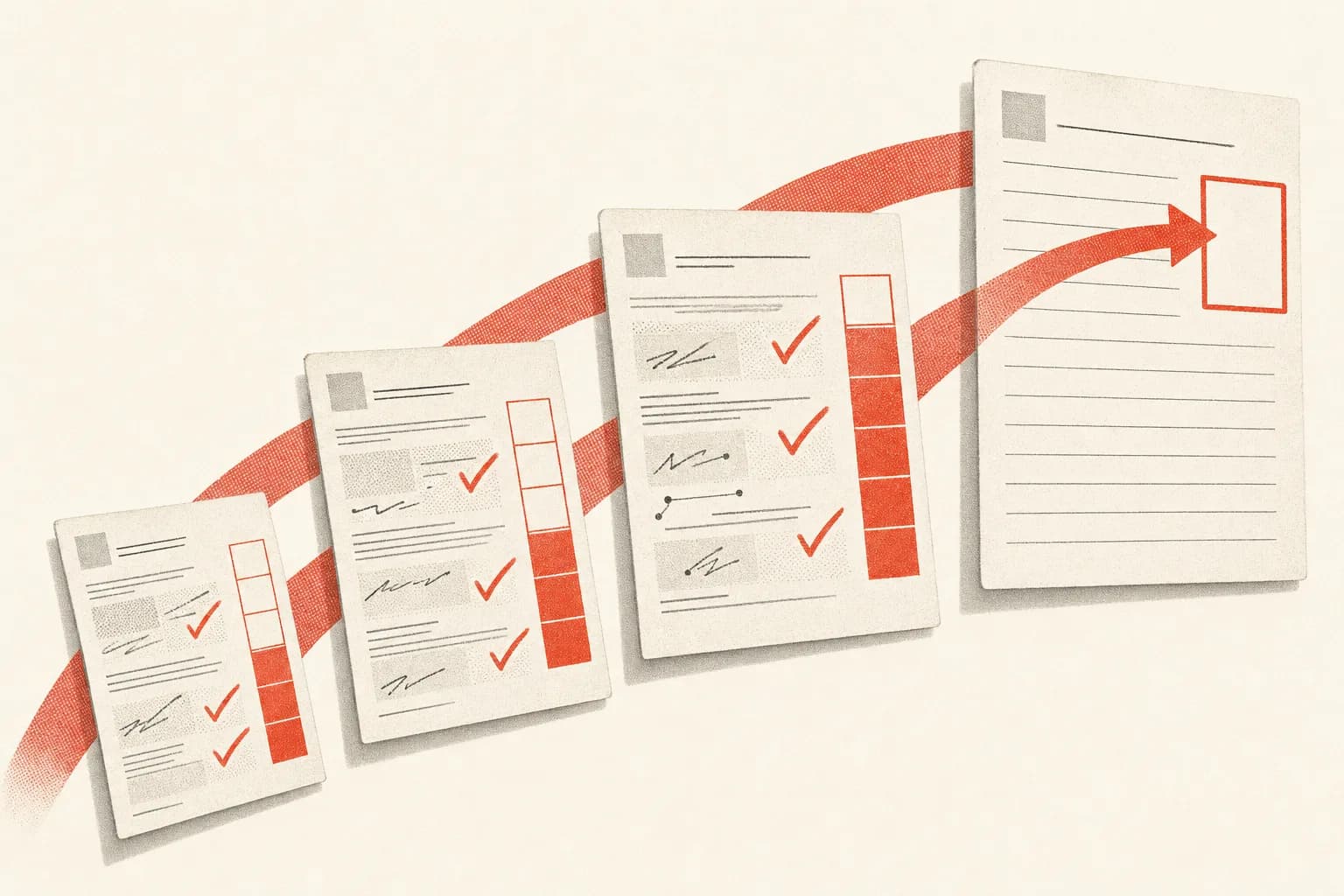
Formative feedback arrives before final submission and tells you what to improve; summative feedback arrives after grading and tells you how you performed. Feedback before summative assessment is therefore the point where comments can still change the work. A 2026 review of formative feedback strategies reported gains in both achievement and engagement across the studies it examined. For Queensland students in Years 10–12, a gain of that kind is often the difference between one grade standard and the next on an ISMG. Tools like ISMGenius, Grammarly and teacher draft reviews all support this process. The key is making each comment specific enough to act on before it is too late.
What is the difference between formative and summative feedback?
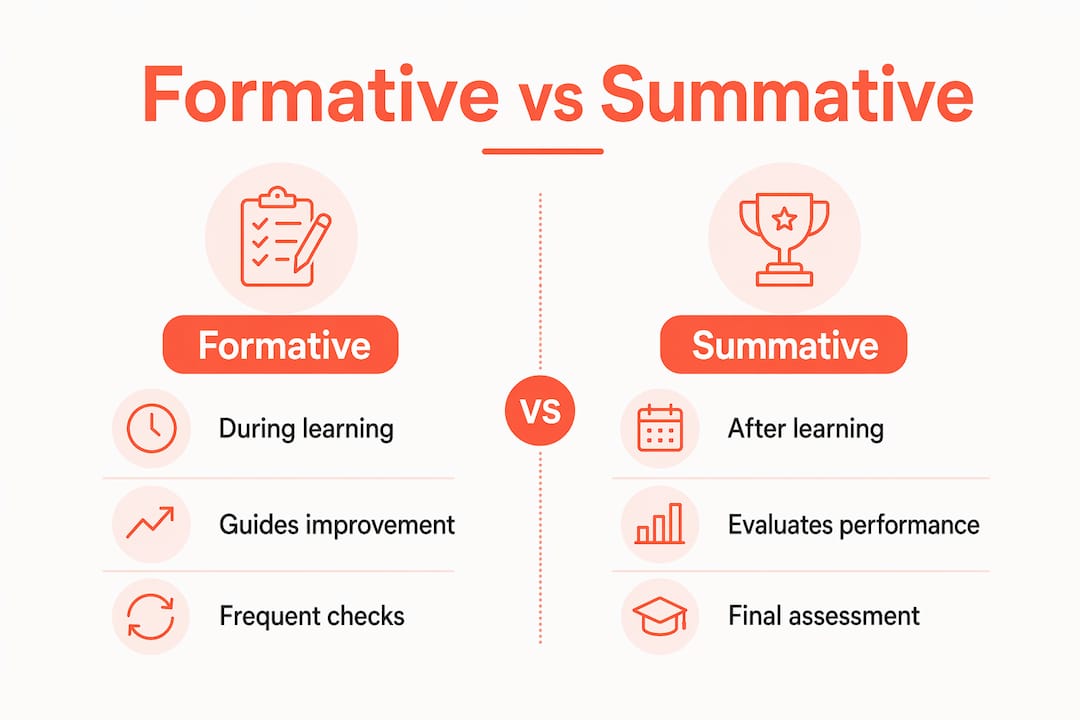
Formative feedback is feedback you receive during the learning process, before your final submission. Summative feedback is the evaluation you receive after your work is complete and graded. Understanding this distinction is the foundation of using pre-assessment feedback well.
Summative feedback tells you how you performed. Formative feedback tells you how to perform better. If you only ever read feedback after your grade is locked in, you are missing the entire point of the process.
Too vague to act on
"Improve your analysis in paragraph three."
Actionable formative feedback
"After the quotation in paragraph three, explain how the narrator's limited point of view makes the reader distrust the claim. That adds the effect your Knowledge application criterion calls analysis."
The second comment names the location, the missing thinking, the revision action and the criterion it serves. You can turn it into a checklist item and know when the change is finished.

QCAA sets out what this should look like. Its QCE and QCIA handbook, section 8.2.4 lists the features of effective feedback, and two of them decide whether feedback is worth anything to you: it should be related to the standards and descriptors, and timely, so that students can act on it and adjust their learning. Feedback that arrives after the mark is locked satisfies neither.
Why formative feedback builds confidence
Frequent formative checks improve learning and confidence before summative assessments. When you regularly receive comments on drafts and practice work, you build a clearer picture of where you stand. That clarity reduces the anxiety that comes from walking into a final task blind.
Pro Tip: Ask your teacher for feedback on a specific section of your draft rather than the whole thing. Targeted requests get more useful responses.
Formative feedback also normalises the idea that your first attempt is not your final attempt. That mindset shift alone changes how you approach difficult tasks.
How can you use feedback effectively before your summative assessment?
Effective formative feedback methods require you to do more than read comments and move on. The students who improve most are the ones who treat feedback as a set of instructions, not a verdict. Here is a practical process you can follow for any Queensland senior assignment.
-
Request feedback on a draft early. Submit a draft or practice response at least one week before your due date. This gives you time to revise without rushing. QCAA describes checkpoints as key stages where you check with your teacher or peers that you are on track for both content and assessment conditions. Using more than one of them beats a single review at the end, and whatever that advantage is worth, it disappears entirely if you ask the night before submission.
-
Focus on one criterion at a time. Trying to fix everything at once leads to cognitive overload and shallow improvements. Your ISMG already splits the task into separate criteria, each marked on its own descriptors, so it gives you the unit of work to focus on. Taking one criterion per revision produces deeper improvement than a broad, unfocused pass. Pick the criterion where you are weakest and address that first.
-
Read comments before you look at any mark. QCAA describes the purpose of feedback as helping you understand where you are going and what to do next, rather than ranking you. If your teacher gives you a draft mark alongside comments, cover the mark and read the comments first. Grades trigger emotional responses that make it harder to absorb written guidance.
-
Rate your own confidence before submitting. Before you hand in a draft, write down how confident you feel about each criterion on a scale of 1–5. Collecting confidence data helps identify your learning gaps and guides more targeted support from your teacher. It also gives you a benchmark to measure your improvement after revision.
-
Apply the “one success, one next step” formula. When reviewing your own work or asking a peer for feedback, use this structure: identify one thing that is working well, then identify one specific thing to improve. QCAA explicitly encourages classroom cultures where students give and receive feedback when peer editing and practise self-assessment, and a two-part structure keeps that exchange manageable enough to act on.
Pro Tip: Keep a feedback log. After each round of comments, write down the top two changes you plan to make. Review this log before your next draft.
What tools and resources can support feedback before summative assessment?
Queensland senior students have access to a range of digital and in-person tools that make pre-assessment feedback faster and more specific. The table below compares the most commonly used options.
| Tool | Type | Best for | QCAA alignment |
|---|---|---|---|
| ISMGenius | AI-powered platform | Draft feedback against ISMG criteria | Yes, built for QCAA subjects |
| Grammarly | Writing assistant | Grammar, clarity, and sentence structure | No direct rubric alignment |
| Teacher draft review | In-person feedback | Criterion-specific comments and clarification | Yes, teacher applies ISMG rubric |
| Peer review | Structured student feedback | Fresh perspective on argument and clarity | Depends on structure provided |
| Google Docs comments | Collaborative annotation | Inline feedback on specific sentences | No direct rubric alignment |
Each tool serves a different purpose. Grammarly catches surface-level writing issues but will not tell you whether your analysis meets the top-band descriptor on a QCAA ISMG. Teacher feedback is the gold standard for criterion alignment, but teachers have limited time. AI tools like ISMGenius fill the gap by analysing your draft against the specific criteria your teacher will use to mark it.
Getting the most from digital feedback tools
When you use any digital feedback tool, give it a complete draft rather than a paragraph or two. Partial submissions produce partial feedback. Read the output against your actual QCAA ISMG rubric so you understand which descriptors you are meeting and which you are not.
Peer and self-assessment multiply feedback effects and encourage student ownership, but they require clear criteria to be effective. If you ask a classmate to review your work, give them the rubric and ask them to comment on one criterion only. Open-ended requests produce vague responses.
Common pitfalls when using feedback before summative assessments
Most students receive feedback but do not use it well. These are the four most common mistakes, and how to avoid each one.
-
Skimming feedback without acting on it. Reading comments once and then closing the document is not revision. After reading feedback, write a one-sentence summary of each key point in your own words. If you cannot summarise it, you have not understood it.
-
Waiting too long to seek feedback. Feedback given after final grades often loses its impact entirely. The same principle applies to late draft submissions. If you submit a draft two days before the due date, you have almost no time to revise meaningfully.
-
Trying to fix everything at once. Addressing every piece of feedback in a single revision session leads to surface-level changes across the board. You end up with a draft that is slightly better everywhere but excellent nowhere. Prioritise the two or three comments that relate to your highest-weighted criteria.
-
Treating feedback as personal criticism. Viewing feedback as a roadmap rather than judgment is fundamental for effective student engagement with feedback. A comment like “your argument lacks evidence” is not an attack on your intelligence. It is a specific instruction: find evidence and add it.
Pro Tip: After your final submission, compare your submitted work to the original draft and the feedback you received. This reflection builds your ability to self-assess on future tasks.
Key takeaways
Feedback before summative assessment works best when you seek it early, focus on one criterion at a time, and treat every comment as a specific instruction rather than a general verdict.
| Point | Details |
|---|---|
| Seek feedback early | Submit drafts at least one week before the due date to allow meaningful revision time. |
| Focus on one criterion | Address your weakest criterion first to build mastery without cognitive overload. |
| Read comments before marks | Covering any draft score helps you engage with written guidance rather than react to a number. |
| Use the right tool for the task | Match your feedback tool to your need: AI platforms for rubric alignment, Grammarly for writing clarity. |
| Track your feedback | Keep a written log of key comments and planned changes across every draft cycle. |
What I have learned from watching students use feedback
The pattern I see most often is this: a student receives detailed, specific feedback on a draft, reads it once, and then rewrites the entire assignment from scratch without referring to the comments again. All that useful guidance disappears. The rewrite is sometimes better, sometimes worse, but it is almost never as good as a targeted revision would have been.
The students who improve the most are not the ones who work the hardest in the final week. They are the ones who build a feedback routine across the whole assessment period. They submit early, ask specific questions, and revise in focused cycles. They also ask for clarification when they do not understand a comment, which most students never do.
The mindset shift that matters most is moving from “this feedback tells me I am not good enough” to “this feedback tells me exactly what to do next.” That is not a soft, feel-good reframe. It is a practical change in how you process information. When you read a comment as an instruction rather than a verdict, you act on it. When you read it as a verdict, you feel bad and close the document.
One more thing: do not wait for feedback to come to you. Your teacher, your peers, and tools like ISMGenius are all available before your due date. The students who seek feedback actively, rather than waiting for it to appear, are the ones who consistently perform above their starting point.
How ISMGenius helps you improve before your final submission
ISMGenius is built specifically for Queensland students who want clear, criterion-specific feedback on assignment drafts before they submit. It analyses your work against QCAA-style ISMG criteria and tells you exactly where you are meeting the standard and where you are not.
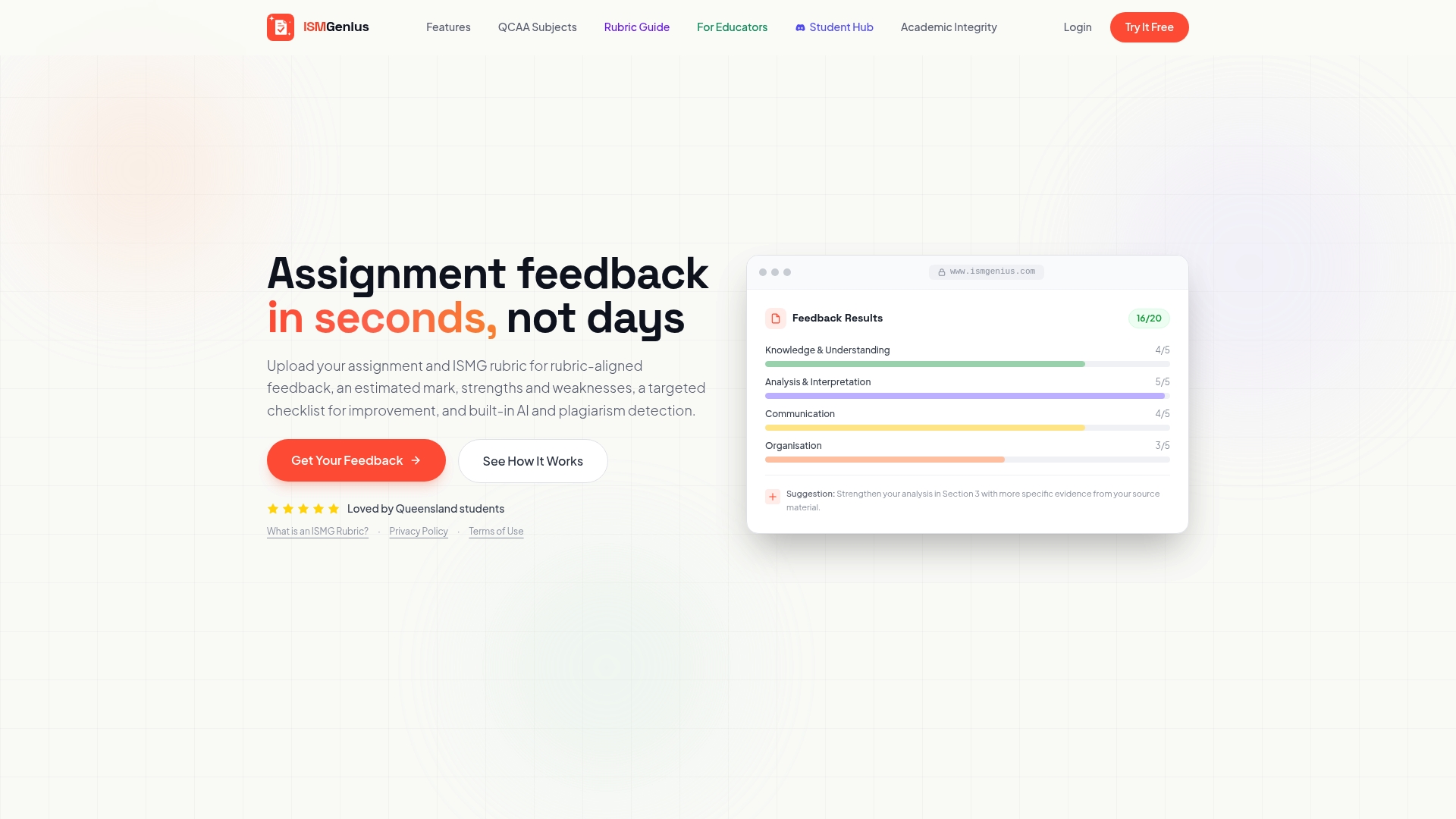
You can start getting AI feedback on your draft today at no cost. ISMGenius covers a wide range of supported QCAA subjects, so it is worth checking whether your course is included. If you are a teacher looking to provide faster, more consistent draft feedback to your class, the ISMGenius educator tool is designed for exactly that. Before you use any AI tool for assignment work, review the academic integrity guidelines to make sure you are using it in a way that supports your own learning.