If you miss an internal assessment due date in a Queensland senior subject, your teacher does not wait for the late version. Under the QCE and QCIA policy and procedures handbook, a result is awarded from the evidence that existed on or before the due date: the draft you handed in, the checkpoint work, the pages your teacher watched you write in class. That evidence is matched to the same ISMG as everyone else's finished response. Your school may not take marks off for lateness, and it may not mark a response you hand in afterwards.
The exception is the case with nothing behind it. If the school holds no evidence of a response at all, the instrument is recorded as Not Rated, and an NR on one instrument means no subject result for Units 3 and 4 and no QCE credit for the pair. Everything on this page sits between those two poles: what counts as evidence, how an extension actually works, what your school's own policy is allowed to add, and what to do today if the due date is tomorrow or was yesterday.
What happens if you do not submit an assignment on the due date?
The rule lives in section 11.1.4 of the handbook, under the heading Non-submission of a student response. It is short, and it is the sentence every school policy in the state is built on:
Read the three conditions as a description of what your teacher is going to pick up the morning after. It has to come from the preparation period, so the draft, the checkpoint submissions and the in-class work all qualify. It has to exist on or before the due date, so the version you finish at lunchtime the next day does not. And it has to be in the same mode as the required response, which is why a written script is not evidence for a spoken task, and a plan is not evidence for an essay.
The second half of the same section settles the question most students are actually asking, which is whether a late assignment loses marks. It does not. The handbook says it is “not appropriate to award a lower result, mark or standard as a penalty for non-submission,” and that any evidence collected on or before the due date “should be matched to the relevant syllabus marking guides or standards.” There is no ten-per-cent-a-day rule in QCAA senior assessment, and a school cannot invent one. What the handbook does instead is draw a hard line at the due date: late work is not marked lower, it is not marked at all, and the earlier evidence is marked in its place.
Examinations run on a different rule in the same section. A student who does not attend an examination on the due date receives an NR for the instrument and is “not to sit the examination or a comparable examination after the due date,” unless they hold AARA or a school-approved absence. There is no earlier evidence to fall back on for an exam, because the handbook itself says evidence cannot be gathered for an unseen paper before the day.
Late, not submitted, or incomplete: what each means for your mark
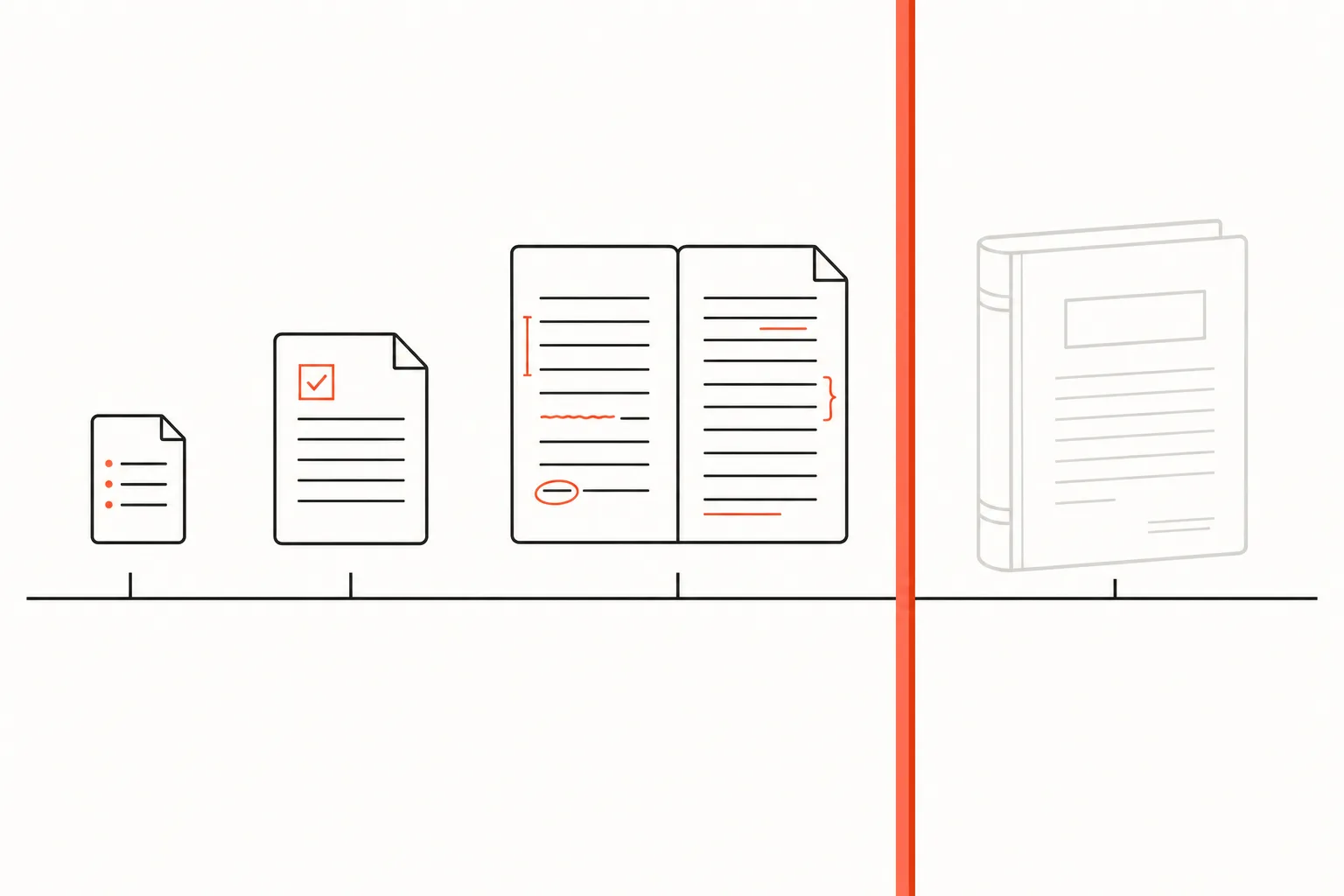
Students describe a missed deadline in three ways, and the handbook treats them as one. Whether you handed it in a day late, never handed it in, or handed in half of it on time, the question the teacher answers is the same: what evidence exists on or before the due date, and what does the ISMG say about it? The difference is only in how much evidence there is.
| Situation | Who decides | What gets marked |
|---|---|---|
| Submitted after the due date, no extension | Teacher, applying the school policy | Evidence from before the due date, usually your draft; the late version is not used |
| Submitted on time but unfinished | Teacher | The response as submitted, criterion by criterion; incomplete evidence can still reach the lower performance levels |
| Nothing submitted, but a draft or checkpoint work exists | Teacher | The draft or checkpoint work, matched to the ISMG |
| Nothing submitted and no evidence in the required mode | School records NR; QCAA result follows automatically | Nothing. NR for the instrument, no subject result for Units 3 and 4 |
| Missed an internal exam without AARA or an approved absence | School records NR | Nothing, and the exam cannot be sat later |
| Extension approved before the due date | Principal or delegate (principal-reported AARA) | Your final response, judged against the new due date |
| Submitted, but the school cannot establish it is your own work | School, after giving you a chance to show authorship | Only the parts that can be identified as yours; NR if none can |
The middle rows matter more than they look. An unfinished response submitted on time is a real response, and the ISMG's lowest performance levels exist for it. The handbook's confirmation chapter puts it this way: to be awarded a zero for a criterion, the student “must have produced some evidence of a response in the mode of the assessment instrument,” and “a zero cannot be awarded where there is no evidence of a response.” Two paragraphs and a half-built argument are marked. A blank document with your name on it is not a response, and the handbook uses almost exactly that example.
The last row belongs to a different part of the system, but it ends in the same place. If a response cannot be authenticated as yours, the school uses the parts that can be, and may award NR if none can. Drafts and checkpoints are the main way schools establish authorship, which is one more reason the draft is worth more than it feels like at the time. The QCE academic integrity requirement covers that side of it.
What your school's assessment policy must tell you, and where to find it
The handbook does not set your submission time, your extension form or the name of the person who signs it. Section 8.4 requires every school to develop an assessment policy from the handbook and the syllabuses, to communicate it “clearly to teachers, students and parents/carers,” and to enact it “consistently across all subjects within the school.” The same section lists what the policy should tell students about due dates, and three of those lines are worth knowing by heart: when assessment is due; “that work cannot be submitted after the due date and that only work completed prior to the due date will be used to make a judgment”; and that if you have a school-approved absence, “assessment still needs to be completed by the due date.” It should also say how to submit, including date, time, location and file types, and when and how to submit a draft.
Everything after that is the school's, and it varies. Published Queensland state school policies show the range. Park Ridge State High School's senior policy sets 4:00pm for hard copies and 11:59pm for electronic submission, through Turnitin, and asks for extension applications “at a minimum of 2 days before the due date.” Cairns State High School's requires its extension form to reach the Head of Department “at least 48 hours before the due date” and states that “computer, printer, or any other hardware failure is not an acceptable reason for either non-submission or an extension to be granted.” Brisbane Bayside State College sends draft extensions to the subject Head of Department and final extensions through its AARA email, and warns that non-submission of assessment by due dates, including drafts, “could lead to the cancellation of enrolment in the senior school.” Holland Park State High School's parent FAQ says plainly that if an assignment is not handed in on time, “the teacher will mark the latest draft available.”
None of those details are QCAA rules, and yours will differ. What they have in common is the handbook underneath: the draft is what gets marked, and the consequences a school adds for lateness are about participation, not marks. Detentions, parent contact and enrolment reviews sit in a school's behaviour and engagement policies. They cannot reach into the ISMG.
Find your policy before you need it. It is usually a PDF on the school website under policies or senior schooling, it is summarised on every task sheet, and the assessment planner your school publishes each semester carries the dates. If you cannot find it, the Head of Department for senior schooling has a copy, and asking for it is not a strange request.
How do you get an extension on an assignment in Year 11 or 12?
An extension is not a favour your teacher does you. In the handbook's terms it is an access arrangement: section 6.4 says that for internal assessment “schools should consider if extensions of time (new due dates) are most appropriate,” that “extensions and comparable assessments are principal-reported AARA,” and that the QCAA “does not specify evidence requirements or require upload of supporting documentation” for them. Three things follow from that, and each one changes how you should ask.
First, the decision belongs to the principal or their delegate, not the classroom teacher, and the principal has to be “reasonably satisfied that the need for the AARA exists” and “able to provide evidence to justify the decision.” Your teacher is the person you tell first, but the person who signs is further up, and most schools route the request through a Head of Department or an AARA email for exactly that reason. Second, the grounds are the AARA grounds. Illness, injury, misadventure and the other circumstances in the handbook's eligibility section qualify. The six ineligible grounds do not, and two of them describe most extension requests that get refused: “matters the student could have avoided” and “matters of the student's or parent's/carer's own choosing.” A clash with a part-time shift, a family trip or a slow start is not an extension case in any Queensland school, because the handbook has already ruled it out. The AARA and illness and misadventure guide has the full eligible and ineligible lists and the medical report rules.
Third, because the QCAA does not specify evidence for a principal-reported extension, your school does. Schools typically want a medical certificate or a letter from an independent third party, on a form of their own, before the due date. Holland Park's FAQ goes further than most: certificates “cannot be accepted if they are retrospective ie dated on or after the assessment due date.” Not every school is that strict, but every school prefers the request before the date to the excuse after it, and the handbook's own advice for illness during internal assessment is to inform the principal's delegate “as soon as practicable,” which it defines as “before, during or immediately after the assessment session.”
An approved extension moves the line rather than removing it. Everything above about evidence and the due date now applies to the new date. If you still cannot produce a final response by then, the handbook says the school “may use evidence of work gathered in response to the instrument, such as the draft, to make a judgment,” and only once every extension option is exhausted can the school lodge an illness and misadventure application with the QCAA. That order of operations, school first and QCAA last, is the part of the process students most often get backwards.
One administrative detail is worth knowing if your extension runs past the school's reporting date. The school records Not Yet Administered for the instrument and reports your provisional marks after confirmation, which the handbook describes as an emergent arrangement for a student with a principal-approved extension. It is not a gap in your result; it is the placeholder that lets the extension exist.
Why your draft is the insurance policy
Section 9.6.1 of the handbook, which tells schools how to prepare marks for confirmation, is where the draft's real status is written down. “For non-examination techniques, developmental work (i.e. a draft response or assessment work-in-progress) would be appropriate evidence to use to award a provisional mark if a final completed response is not provided on or before the due date.” For a performance or a project with a performed element, “a draft or checkpoint version is evidence of a performance.” And then the sentence that closes the loop: “If there is no evidence of the student's developmental work towards a response in the same mode as the required response, a result of NR is awarded.”
The words doing the work are same mode. For a spoken task, the handbook wants “a spoken response rather than a draft of a written speech,” and it specifically rules out a draft “rendered by text-to-speech software, as the student's voice is to be recorded.” For confirmation, “a written script for a live multimodal or spoken assessment, is not sufficient,” and neither are teacher observations on their own. If your assessment is a presentation and all that exists before the due date is your slides and a script, the school may have nothing it can mark. Record the rehearsal.
The draft also survives into the QCAA's own processes. Schools do not normally send drafts to confirmation, “except if a draft was used to award a provisional mark,” and the handbook notes that when a final response is lost or incomplete, a variation to the sample “is usually not required if the school has used evidence collected on or before the due date, such as a draft response.” A draft that reached your teacher on the draft date is not a formality that gets thrown away once the final arrives. It is the thing the whole system falls back on when the final does not.
Evidence
Work in response to the instrument that the school has actually gathered: a submitted draft, checkpoint work, in-class writing, photographs of a product, a recorded rehearsal. Teacher observations alone are not evidence for confirmation.
Due date
Set by the school, made clear in advance, and then consistently applied. Evidence is gathered on or before it. An approved extension replaces it with a new one for you alone.
Extension
A principal-reported access arrangement that gives you a revised due date. Approved by the principal or delegate on AARA grounds, before the date wherever possible.
Non-submission
No final response on or before the due date. The result is awarded from earlier evidence in the same mode; no penalty may be applied. With no evidence at all, NR.
Authentication
The school establishing that a response is your own work, through drafts, checkpoints, class observation, plagiarism software or an interview. Work that cannot be authenticated cannot be marked.
Checkpoint
A declared stage in the task, such as a research question, an outline or the draft, where the teacher checks progress, gathers evidence and can intervene. The draft is a checkpoint with its own rules.
The handbook asks schools to “provide points of intervention so that teachers, other school staff and parents/carers can provide support to prevent the non-submission of a response.” That is what checkpoints are for from the school's side. From yours, each one is a deposit: a dated piece of evidence that will be marked if nothing better arrives. Why drafts matter before submission makes the writing case for the same habit, and formative feedback before summative assessment covers what to do with the one round of draft feedback you get.
What to do today if you are going to miss the due date
The order below is the handbook's order. Telling someone before the due date is what makes an extension possible; submitting what you have is what makes a mark possible; the documentation is what makes the first two stick.
Tell your teacher before the due date, in writing
An email today with the task name, where you are up to and why. It starts the school's process, it is dated, and it is the difference between a request and an excuse. If something serious has happened, ask who the principal's delegate for AARA is and copy them.
Submit what you have, on time, in the required mode
An unfinished response submitted by the due time is evidence and is marked against every criterion. Nothing submitted is not. For a spoken or performed task, record it, even on a phone. Use the school's submission method, and keep the receipt.
If the reason is outside your control, get the documentation today
See a doctor while you are unwell, not afterwards; the certificate or medical report must cover the dates around the due date. Non-medical circumstances need an independent third party, such as a funeral director, police officer or social worker. Some schools will not accept a certificate dated after the due date.
Ask for the extension through the school's process, not in the corridor
Use the form, the AARA email or the Head of Department your policy names. Ask for a specific new date. If approved, that date becomes your due date and everything above applies to it. If the reason is your own choice, do not apply; plan to submit on time instead.
Keep every version somewhere you can prove the date
Email a copy to yourself and your teacher, turn on cloud version history, and keep the draft your teacher gave feedback on. If a file corrupts or a laptop dies, those copies are the evidence, and most school policies say hardware failure is not grounds for an extension.
Where each of those actions lands in the week depends on which side of the due date you are standing on. The days around a due date look like this in most Queensland schools; the exact windows are your policy's.
- Draft due date, usually one to two weeks out
Hand in a complete or near-complete draft in the required mode. This is the evidence the school keeps and the only draft feedback you get. Miss it and you have lost your insurance, not just your feedback.
- Two working days before
The latest most school extension processes want to hear from you. Cairns SHS says 48 hours; Park Ridge SHS says two days where possible. Forms, documentation and the Head of Department's decision all happen in this window.
- The day before
Final pass, sleep, submit early if the portal allows. The night-before checklist is built for this evening. If you know it will not be finished, submit the best version you have rather than nothing.
- Due date, at the time your policy sets
4:00pm for hard copy and 11:59pm for electronic submission at some schools; earlier at others. Evidence gathered up to this moment is what can be marked. Keep the submission receipt.
- The morning after
No new evidence can be added. The teacher marks what exists from before the due date, and the school applies whatever participation consequences its policy sets. If illness or misadventure struck on the day, tell the school this morning and get the documentation now.
- The school's reporting date
Provisional marks go to the QCAA. A student on an approved extension is recorded as Not Yet Administered until the work is in; a student with no evidence is recorded NR.
If you want the same decisions laid out for the situation you are actually in, pick it below. The helper turns the handbook rules above into what to do today, who decides, what gets marked and what to gather.
Missed-deadline helper
Pick what has gone wrong and see what to do today, who decides, what gets marked and what to gather.
Illness, injury and misadventure are AARA grounds, and for internal assessment the handbook says an extension to a new due date is the first tool the school reaches for.
What to do today
- Tell your teacher and the principal’s delegate for AARA today, in writing, before the due date. The handbook asks for this as soon as practicable: before, during or immediately after the assessment.
- See a doctor while you are unwell. The certificate or medical report has to cover the dates around the due date, and some schools will not accept one dated after it.
- Ask for an extension through the school’s process, naming a specific new date. Approved, it becomes your due date for this task.
- Submit what you have by the original due date anyway, in the required mode. If the extension is refused or you still cannot finish, this is the evidence that is marked.
Who decides
Principal or delegatethen The QCAA
An extension is principal-reported AARA: the principal or delegate must be reasonably satisfied the need exists. The QCAA is involved only if every extension option is exhausted and the school lodges an illness and misadventure application.
What gets marked
Your final response, judged against the new due date. If you cannot produce one by then, the school uses evidence gathered before it, such as your draft, and only once other AARA have been exhausted.
What to gather
- Medical certificate or QCAA medical report with a diagnosis and the dates
- For a non-medical event, a letter from an independent third party
- The school’s extension or AARA form, completed
- A copy of your draft and any checkpoint work
Guide only. Your school’s assessment policy and your teacher control the real answer: the submission time, the form, who approves an extension and what evidence the school already holds. Nothing here replaces a conversation before the due date.
It is a map of the handbook, not of your school. Your assessment policy sets the submission time, the form and the person who approves, and your teacher knows what evidence the school already holds. A conversation before the due date beats every card above.
What happens to your subject result and QCE if there is no evidence at all?
This is the outcome the rest of the page exists to prevent, so it is worth stating without softening. Section 11.1.2 says that if a student has had the opportunity to engage in the teaching and learning “but has not provided any evidence of a response, the school is to record a not rated (NR) for the assessment. When an NR is recorded for an instrument, the final result for Units 3 and 4 will automatically be determined to be NR.” The school cannot enter a final result at all; the NR flows through on its own.
The credit consequence is in section 8.2.1: “If a unit or pair of units is incomplete, due to non-completion of assessment, a unit or subject result cannot be awarded and no credit towards the QCE will accrue for the unit/s.” That is the difference between a bad mark and no mark. An E on one instrument still leaves you with a subject result, an ATAR-eligible result if the subject is General, and QCE credit for the pair. An NR leaves nothing to build on, in a subject where three internal assessments already carry most of the weight; how your QCAA subject result is built shows how much of the 100 that is.
Nor can you patch the hole afterwards. The handbook is explicit that “a student cannot repeat one summative unit or a single assessment instrument only.” Repeating means repeating Units 3 and 4 as a pair, all the learning and all the assessment, and a unit cannot be repeated until it has been completed. In Units 1 and 2 the mechanism is gentler but the logic is the same: a school records NR for a unit when there is “insufficient evidence produced by the student in response to the complete assessment program” to rate it satisfactory or unsatisfactory, and no credit accrues.
The handbook also puts an obligation on the school: it “should inform students and parents/carers promptly if incomplete assessment will mean that the student will not meet requirements for a subject or course result.” If that conversation is happening, it is not a formality. It is the last point at which a draft, a recorded rehearsal or a half-finished response still changes the outcome.
The morning after: if you have already missed it
The due date has gone and the assignment is not in. Two things are true at once. Nothing you produce now can be marked, and what you do this morning still matters, because the school is about to decide what evidence it holds, whether any circumstance applies, and how its own policy responds.
- Contact your teacher first thing, before the lesson, and say what happened in one honest paragraph.
- Ask what evidence the school already has for you: the draft, checkpoint work, anything from class. That is what will be marked, so you want to know what it is.
- Hand in what you have anyway. It will not be marked as the response, but most policies require it for participation, and it shows the work was yours.
- If illness or misadventure struck on or around the due date, see a doctor today and tell the principal's delegate today. The handbook's window is “before, during or immediately after” the assessment; the further you are from the date, the less a certificate can cover.
- Do not disappear from the subject. The next instrument is another due date, and a second NR is not survivable in the same way a first one might be.
Then treat it as data. Look at where the plan broke: the draft that never got handed in, the week that was lost to another subject, the file with one copy. The internal assessment timeline exists so the next task has a draft in the teacher's hands with a week to spare, which is the single change that makes every rule on this page work in your favour rather than against you.
Key takeaways
- A late or missing assignment is marked on the evidence that existed on or before the due date, in the same mode as the task. Your draft is the usual evidence.
- Schools may not deduct marks for lateness. They also may not mark work completed after the due date without an approved extension.
- An unfinished response submitted on time is a real response and is marked. Nothing submitted, and no draft, is NR.
- An extension is principal-reported AARA: AARA grounds only, approved above the classroom teacher, requested before the due date with the documentation your school names. It creates a new due date; it does not remove one.
- One NR instrument means no subject result for Units 3 and 4 and no QCE credit for the pair, and a single instrument cannot be repeated.
- Your school's assessment policy sets the time, the method, the form and the consequences beyond the mark. Find it in week one, not the night before.
Before the draft date, not after the due date
The version of this page you want to be reading is the one where the draft is already in. Every rule above rewards the student whose developmental work exists, is dated and is in the right mode, and none of them can help the student whose first complete version was going to be the final one. Getting the draft to your teacher early enough to act on their feedback is what protects the mark; getting it there at all is what protects the result.
The handbook wording on this page is from the QCAA's QCE and QCIA policy and procedures handbook, version 7.0, last updated 14 January 2026: sections 6.4 and 6.5 on AARA and illness and misadventure, 8.2 and 8.4 on drafting, due dates and school assessment policies, 9.6.1 on preparing for confirmation, and 11.1 on determining results. The school examples are from the published senior assessment policies of Park Ridge State High School, Cairns State High School, Brisbane Bayside State College and Holland Park State High School, quoted to show the range, not as rules that apply to you. Your own school's current policy and the current handbook take precedence over anything here.