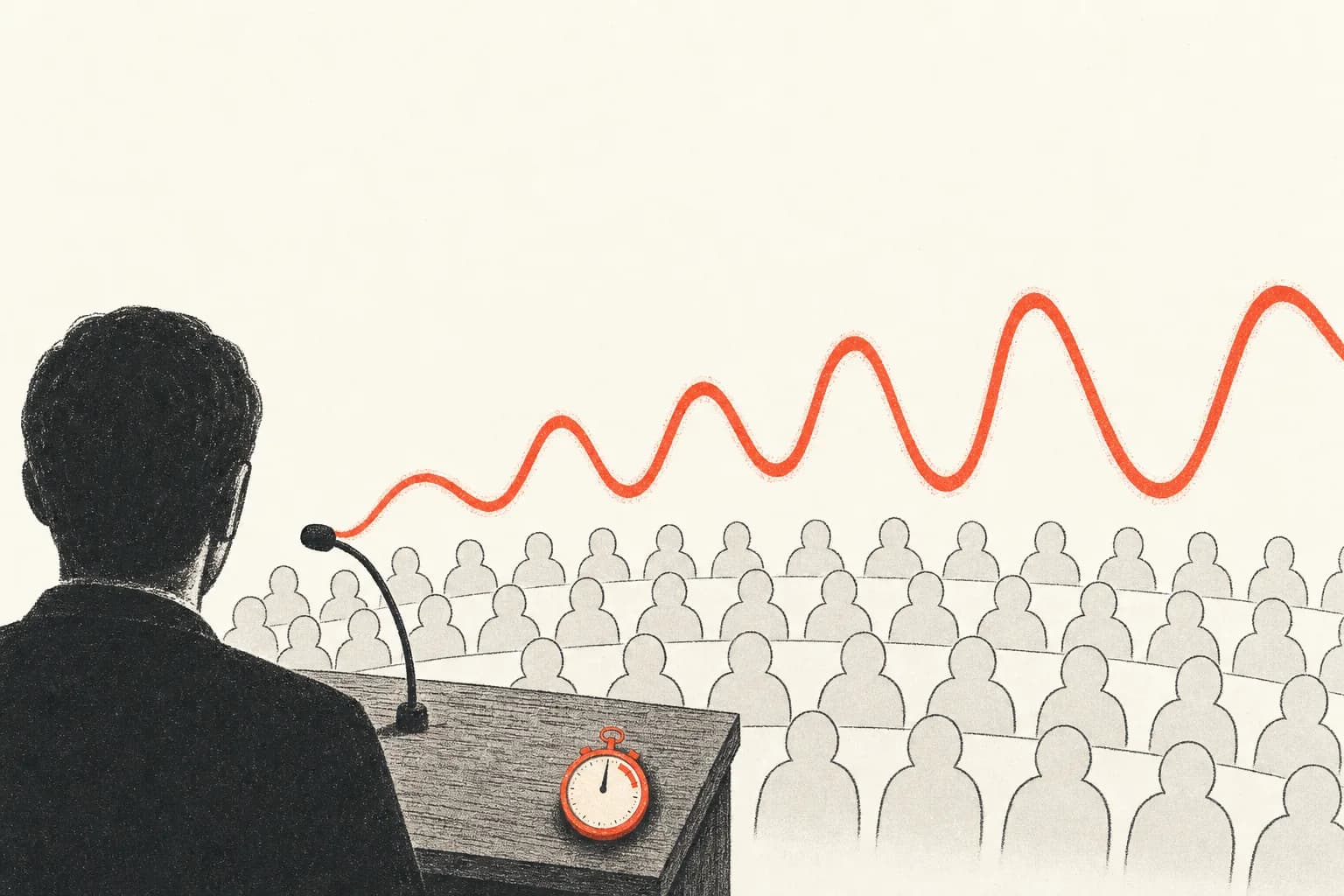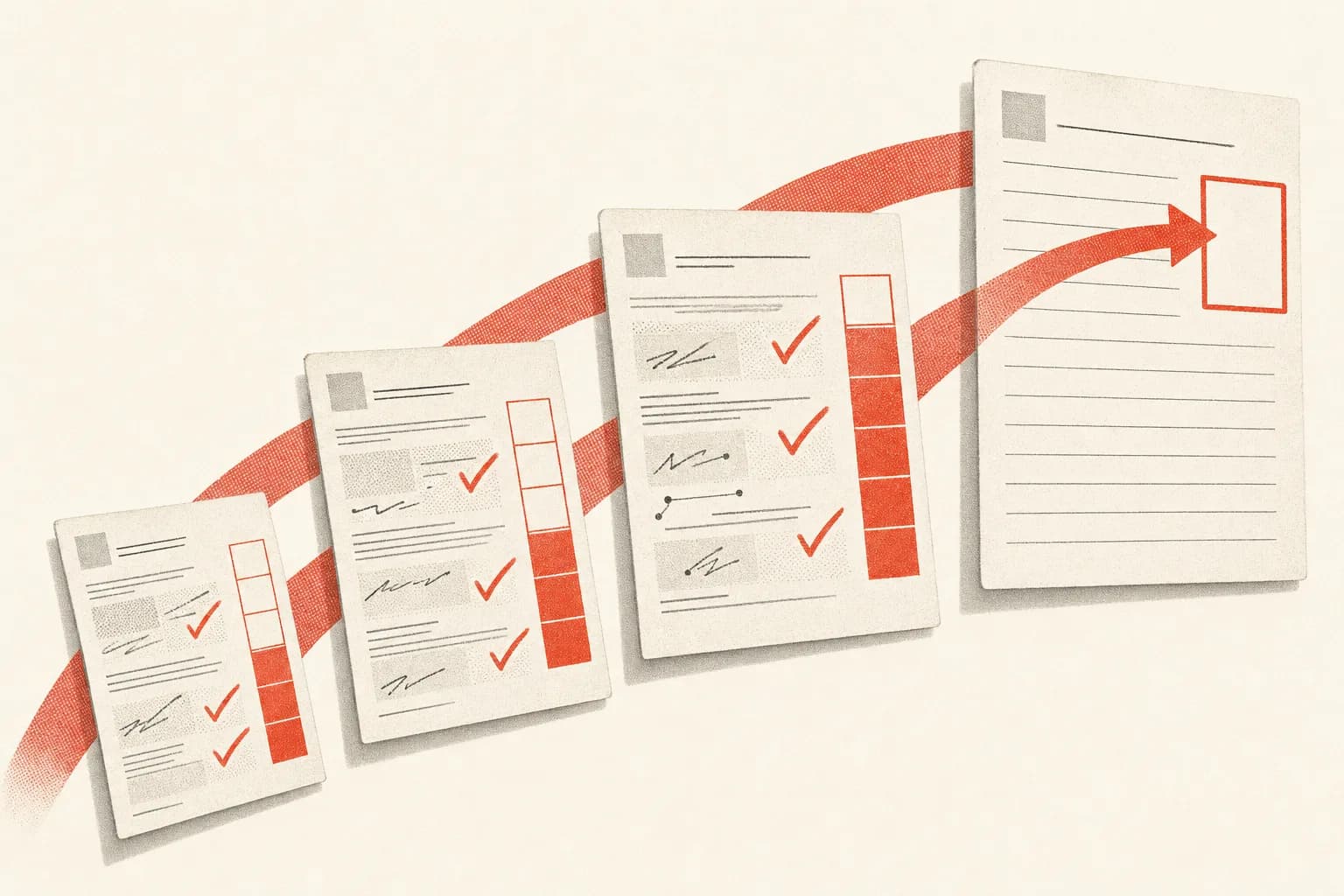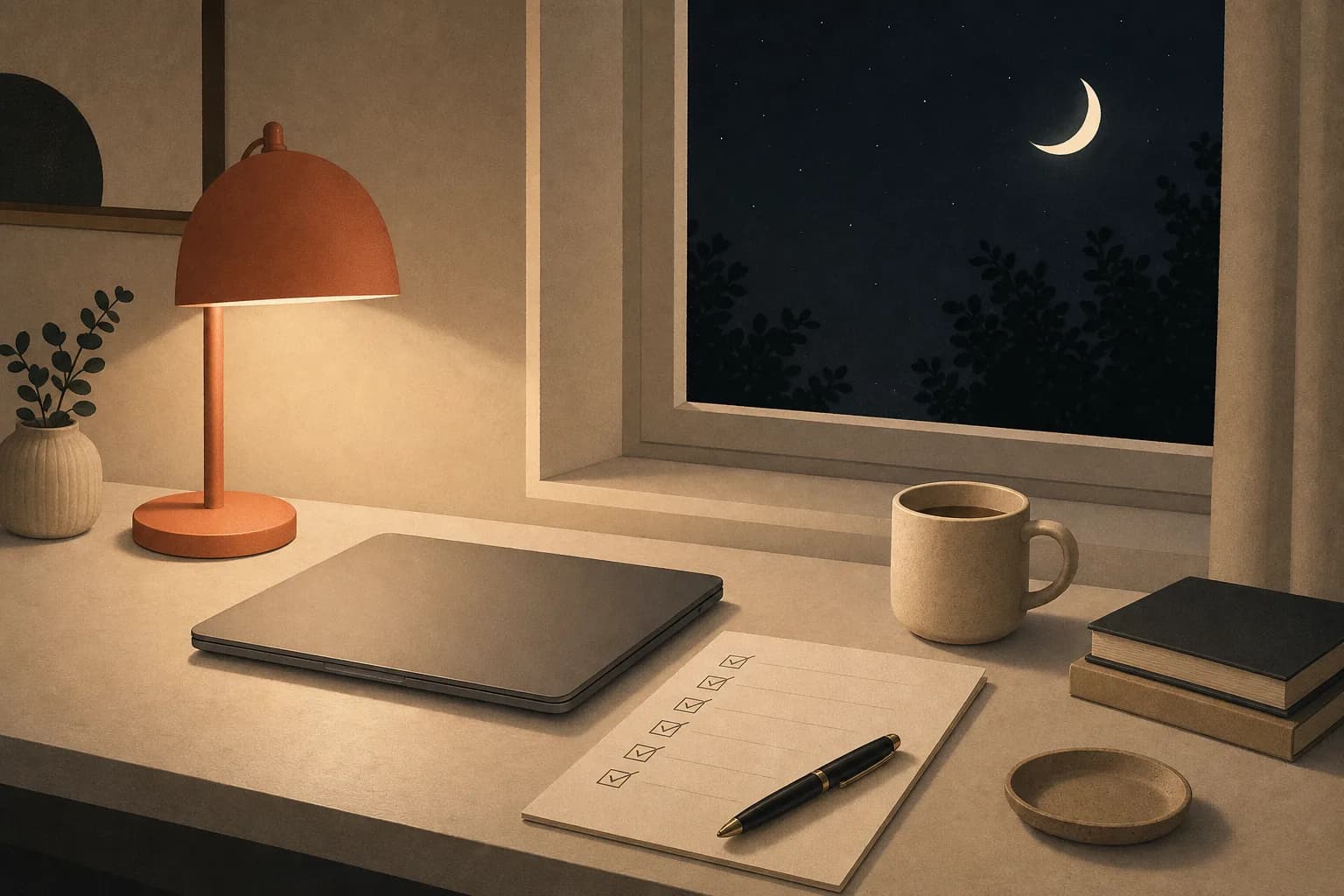
It is the night before your assignment is due. The draft is more or less done, and the temptation is to keep working until it is perfect or until you fall asleep, whichever comes first. The most valuable thing you can do this evening is probably to stop earlier than you want to, because the evidence on tired brains is clear, and it is not on the side of the all-nighter.
Why the all-nighter costs more than it gives
Start with what fatigue does to you. In a study published in Nature, researchers found that after about seventeen hours awake, performance on a coordination and vigilance task had dropped to the level of someone at the blood alcohol limit for driving. After twenty-four hours awake, it was roughly double that. You would not submit an assignment drunk. Late enough into an all-nighter, on the measures that study used, you are close.
The more useful finding is about what kind of thinking breaks first. A large review of sleep-deprivation studies found that losing sleep barely touches your reasoning, but it hammers your sustained attention. In plain terms, an all-nighter does not make you stupid. It makes you unable to notice things. And noticing things is exactly what checking your work is made of. So the all-nighter destroys the one ability the last night actually needs.
Decide what tonight is for
Tonight is for a final, targeted pass. It is not for a rebuild. Say that to yourself before you open the document, because the difference decides how the evening goes.
The rebuild is a trap for a measurable reason. When researchers asked students to predict when they would finish a major writing project, the students were wildly optimistic. Fewer than half finished by the date they themselves had named as their absolute worst case. If your own worst-case estimate is that unreliable, then a voice at nine in the evening saying "I can restructure this whole thing by morning" is the least trustworthy estimate you will make all week.
A calm order for the evening
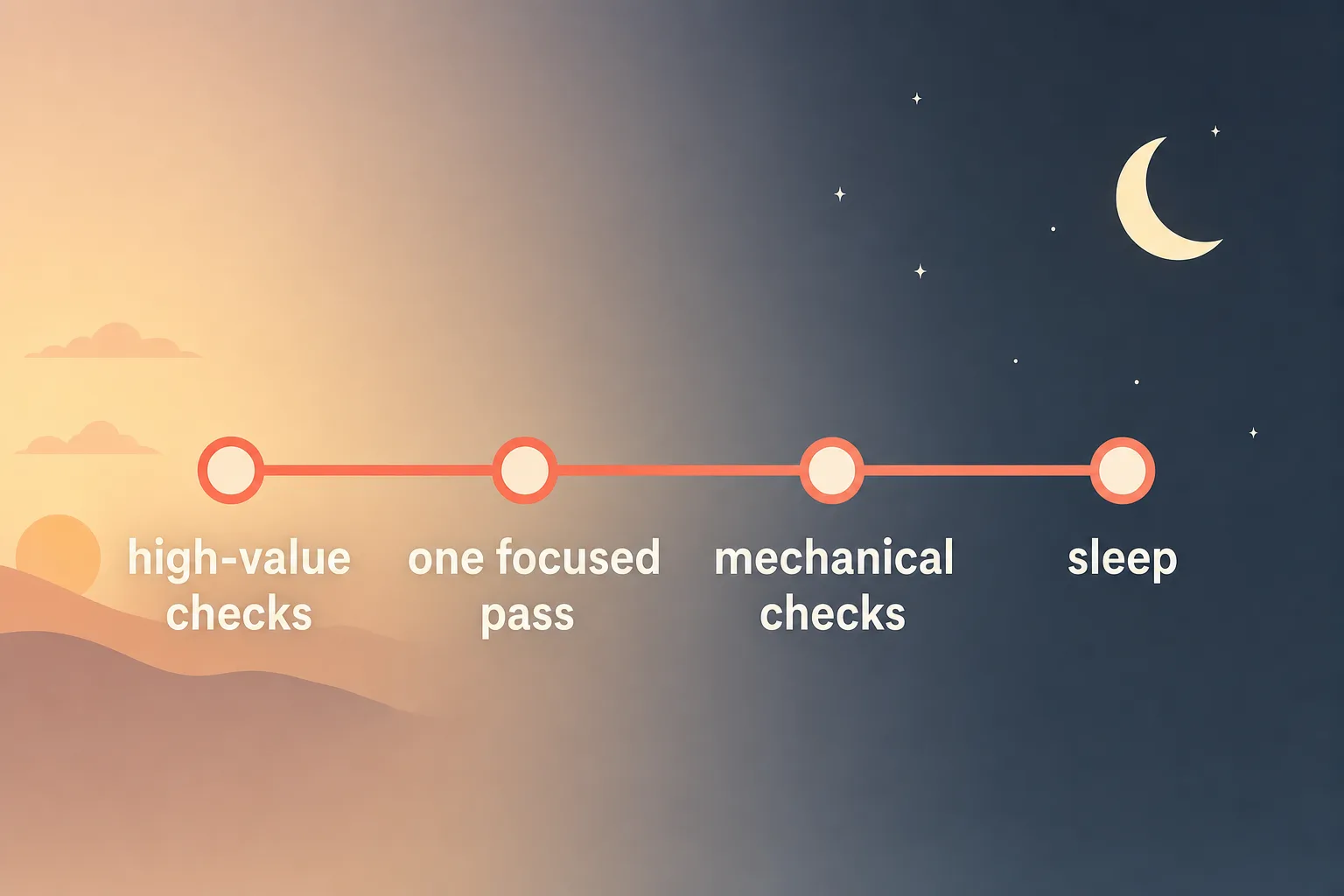
Work through the evening in this order, and protect the end of it for sleep.
- Early evening
Do the highest-value checks first, while your attention is still good. Read your task sheet and your ISMG one more time, and confirm your response actually answers the question that was set.
- Mid evening
Do one focused pass for the single criterion you are weakest on. Change one thing well rather than touching everything.
- Before you get tired
Handle the mechanical checks that do not need insight: referencing, word count, the file name, and that you are submitting the right version in the right place.
- Then stop
Save, close the laptop, and sleep. The evidence says the last hour awake is worth less than the sleep it costs you.
The final pass, read it aloud
When you do your last read-through, read it aloud. In a proofreading study, reading aloud improved detection of both typos and grammar errors compared with reading silently. The striking part is that the people in the study did not believe it had helped, even though it plainly had. It is the technique you will feel silly using and will benefit from anyway.
One more thing that study's cousin found: reading backwards, the old trick, does not help. What helps is simply reading it again. A second careful forward pass beats a clever single one. So keep the final checklist small, and run through it slowly, out loud.
The final pass, out loud:
- Does the first paragraph answer the actual question that was set?
- Does each paragraph make one clear point, and does the point come first?
- Is every claim you make actually supported by evidence nearby?
- Are the references and citations complete and consistent?
- Are you within the length limit, so nothing important gets left unread?
- Is this the correct, final file, uploaded to the correct place?
Sleep is doing work for you
Stopping is not giving up. Sleep is not empty time. In another Nature study, people who slept after learning a task were more than twice as likely to have a sudden insight into how it worked than people who stayed awake for the same stretch. But there was a condition: it only helped the people who had done the work first. Sleep does not invent an answer out of nothing. It reorganises what you already built.
So the deal is simple. Do the work tonight, then let your sleeping brain do the part you cannot force. The structural improvement you are hoping to bully out of yourself at two in the morning is more likely to arrive on its own after you rest, and you will be awake enough to actually use it.
Key takeaways
Tonight is for a targeted final pass and an early night, not a rebuild, because your attention is the first thing fatigue takes and the last thing checking your work can do without.
- Do the high-value checks early, while your attention is fresh.
- Do not start a structural rewrite the night before; distinguish a real fault from reading fatigue.
- Read your final pass aloud, and read it twice rather than backwards.
- Finish the mechanical checks before you get tired.
- Sleep, because rest more than helps insight, it protects the attention that proofreading needs.
What I learned from my own late nights
I used to treat the night before as the most productive night of all. Everything felt urgent and important, and I would still be rewriting paragraphs at one in the morning, certain I was improving them.
Looking back, most of those late changes were not improvements. They were the sound of a tired brain moving words around because it could not tell the draft was already finished. The mornings I submitted well were the mornings after I had stopped at a reasonable hour, slept, and done one clear pass while I could still see straight.
If tonight is your night before, be kind to the version of you who has to press submit tomorrow. Do the final pass, then rest. That is not laziness. It is the most evidence-backed decision on offer.
Do your final check with ISMGenius
If you want a second read before you sleep, ISMGenius reads your draft against your task's own ISMG and shows you, criterion by criterion, where it sits and what the next band up asks for. That makes it easy to pick the one criterion worth a final pass, instead of reworking everything. It is an informed estimate to guide your revision, not your official grade, and it never writes the work for you.
You can run a final draft through ISMGenius, learn to read your ISMG before that last pass, and see how to move a draft up a band with one targeted change. The fatigue findings come from studies on fatigue and performance and on how sleep supports insight.