The 2026 QCAA external exams run from Monday 26 October to Tuesday 17 November. Every paper is sat under the same conditions across Queensland and marked by someone who has never met you. Everything you can still do about those marks happens before you walk into the room. This guide covers how to use the time you have, from building a checklist and sitting past papers to the planning window and the rules on the day.
Count back from the paper you sit first
The block runs over four weeks, and where your subjects fall inside it changes the plan. A student whose first paper is Economics on the opening Monday has a different October from one whose first is Physics on 9 November. Find the date you sit first. Every step below counts back from it.
Your countdown
Build your revision plan
Five windows run from the last weeks of Term 3 to the close of the block on 17 November. Add your subjects and the plan points at the paper you sit first.
- Until 18 September
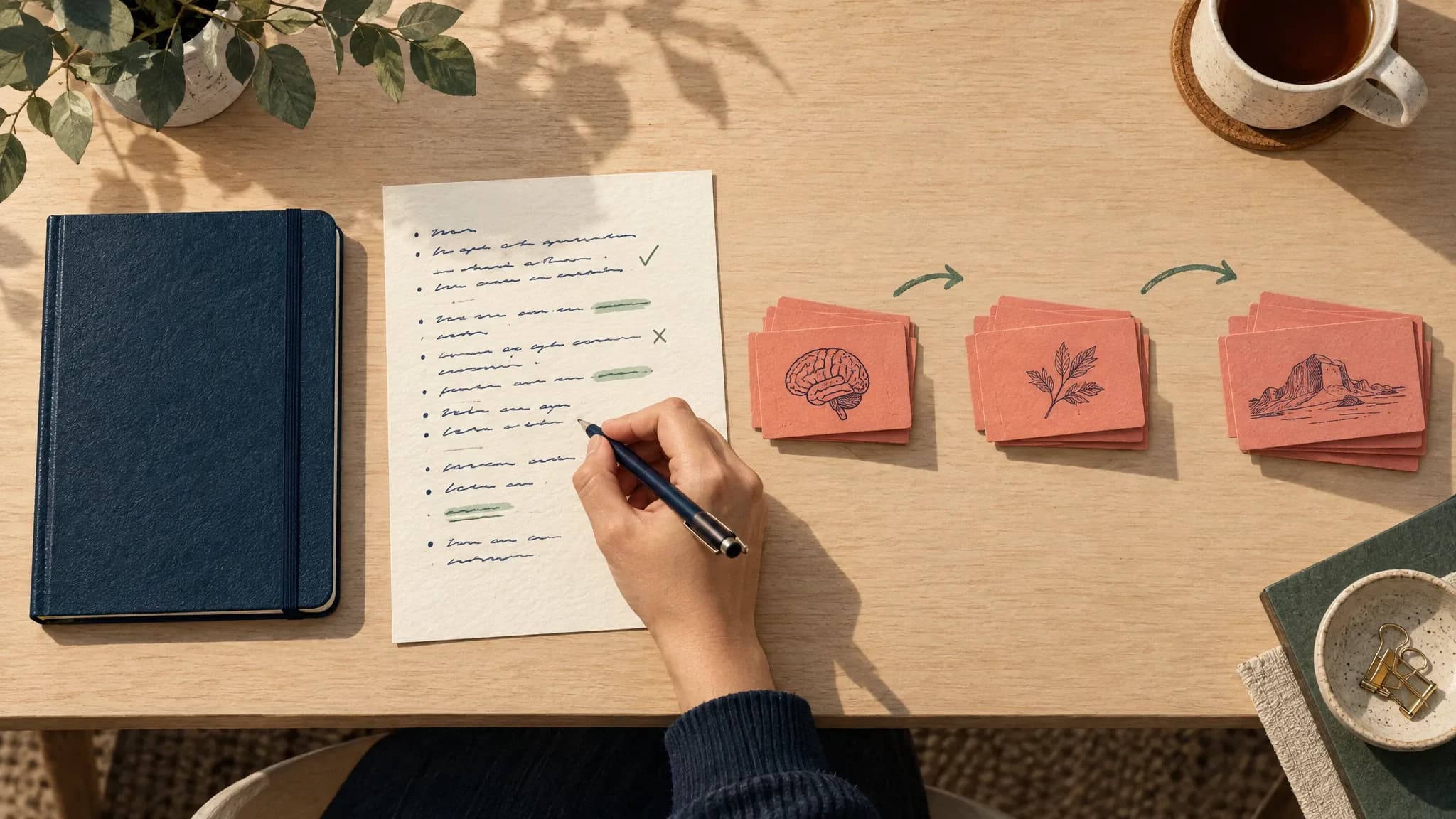
Turn the syllabus into a checklist
Finish Term 3 knowing what the paper is allowed to ask you.
- Download the Unit 3 and Unit 4 subject matter for each subject and cut it down to a single page of dot points.
- Mark every dot point with a tick, a question mark or a cross. The crosses are your revision list, and you now have one per subject instead of a vague sense of being behind.
- Finish any internal assessment still open. A mark you can still move is worth more per hour than one you are revising for.
- 21 September to 5 October
Complete one full past assessment per subject
Find out what the exam feels like while there is still time to react.
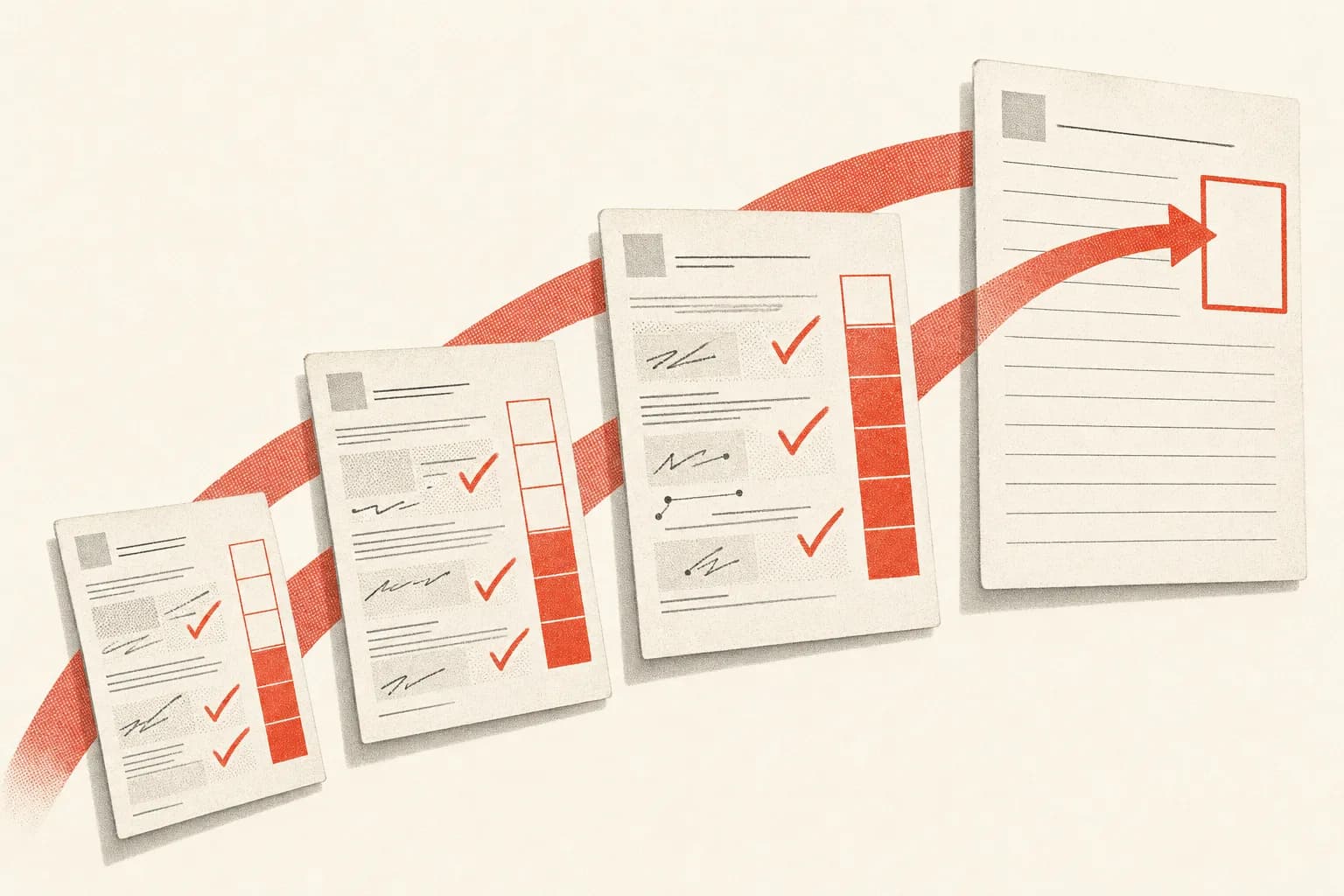
- Work through one complete past assessment in each subject with the syllabus open beside you, including every paper it contains. This first attempt is reconnaissance, so untimed and open book is the point.
- Mark it yourself against the published marking guide and write down every mark you could not award yourself.
- Rewrite your crosses list from what the paper exposed rather than from what you assumed in September.
- 6 to 16 October
Add the clock
Turn knowledge you have into marks you can earn inside the working time.
- Complete a second past assessment per subject to full time, including the planning window for every paper, in one sitting per paper and by hand.
- Mark it against the guide again and compare the two attempts. The gap between them is a timing problem, and a timing problem has a different fix from a knowledge problem.
- Spend the rest of each session on the dot points you crossed. The ticked ones feel productive and pay nothing.
- 19 to 23 October
Close the gaps you found
Spend the last week on the marks your papers said you were losing.
- Work only from your list of unearned marks. Rereading the whole course at this point returns almost nothing.
- Rehearse the opening of a full-mark response to each verb your subject leans on hardest.
- Confirm your personal timetable, your room and your start time with your school, and check what you are permitted to bring.
- 26 October to 17 November
Work the turnaround
Protect the exams you have not sat from the one you just did.
- Skip the post-mortem on the way out. Reconstructing a finished paper costs you the next one and changes nothing about the first.
- Use the gap between sittings for the crosses in the next subject only.
- Sleep on a normal schedule. The block runs four weeks, and a debt taken out in week one is still owed in week three.
Your subjects don't deserve equal time, and two things decide the split. The first is the date. A subject you sit in week one has to be ready before one you sit in week three. The second is the weighting. In the ten maths and science subjects the exam carries 50 of your 100 marks, and in every other General subject it carries 25. Half a science result is still unmarked in October. Three quarters of an English result is already banked.
Turn your syllabus into a revision checklist
The exam is written against the Unit 3 and Unit 4 subject matter in your syllabus, and the syllabus is public. Your textbook covers more in some places and less in others. Your notes cover what your teacher had time for. Only the syllabus tells you what the examiners are allowed to ask.
Open your subject's syllabus on the QCAA website, copy the Unit 3 and 4 dot points onto one page, and mark every line.
- Tick means you could answer a question on it now, under time, without notes.
- Question mark means you know it but have never had to produce it cold.
- Cross means you would lose the marks today.
The crosses are your revision list. It usually runs to fifteen or twenty lines per subject, which is far more useful than a 200-page textbook and a vague sense of being behind. Rereading the ticks is the most comfortable and least useful thing you can do with an evening.
Where to find past papers, and how to use them
Every General subject has an assessment page on the QCAA website with a Past papers table. It holds previous years' question and response books, any stimulus book, and the marking guide for each paper. QCAA also publishes a subject report after each year's exams, describing where the state's students fell short. It is a good forecast of where you will fall short too, and almost nobody reads it.
Collect them now
Download two years of papers, the marking guides and the subject reports for every subject you sit. Do it today, while you can still ask a teacher if something is missing.
Sit the first one open book
No timer, notes allowed, every paper in the set. You are finding out what the questions look like, how much they expect you to write, and which of your crosses actually come up.
Mark it yourself, honestly
Go through the marking guide question by question and award only what you can point to in your own writing. The marks you missed are your new revision list.
Sit the second one to time
Full working time, planning time first, by hand, in one sitting. Writing for two hours is a physical skill you probably haven't practised since your last internal exam. If your timed score falls well below your open-book score, the problem is pacing, and only more timed papers fix it.
Mark your own paper against the guide
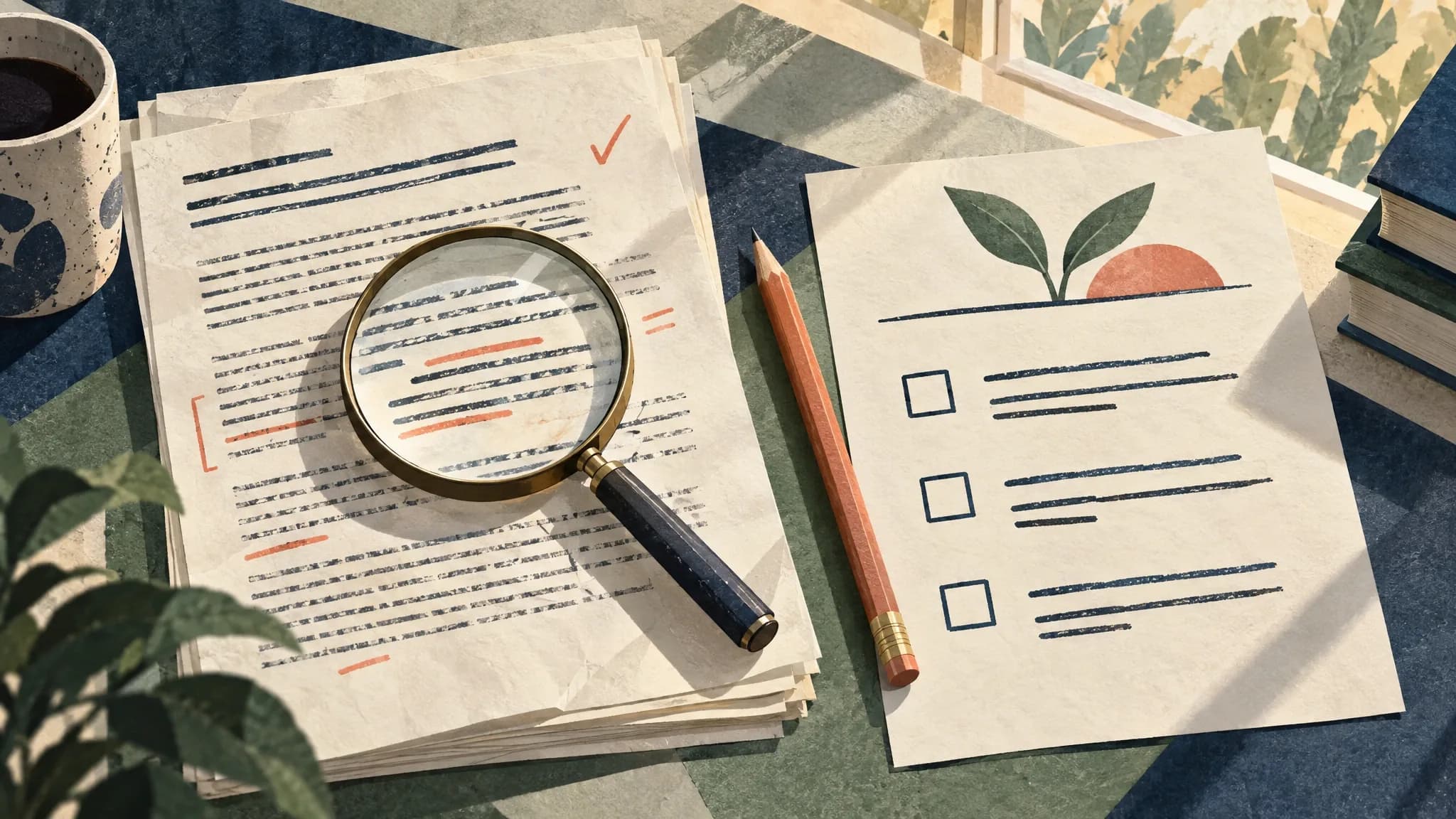
Most students skip this step, and it is where the marks are. A marking guide is written for a marker who has never seen you and has to decide from your words alone whether each feature is there. Reading one teaches you what "there" looks like faster than any revision.
Take one response, find the criterion it is marked against, and ask what the marker can point to.
The data shows that enzyme activity increased with temperature up to 40 degrees and then decreased. This is because the enzyme denatured above its optimum, which changed the shape of the active site so the substrate could no longer bind.
Why this earns the mark: the first sentence describes the trend, which most students do without being asked. The marked sentence does the work. It names the mechanism and links it to the change. A question that asks you to explain a result awards marks for that link. Without it, the answer describes a graph and stops short.
After twenty responses you start writing the second sentence before anyone asks for it. Our guide to reading a marking guide and finding the marks you are leaving behind covers the same skill for internal assessment.
Use the planning time well
Every paper starts with planning time before the working time. QCAA sets the length by subject.
During planning time you can read the paper and make notes on the planning paper, which is not marked. You can't write in your response book or touch your calculator. If your paper also has perusal time, you can't pick up a pen at all during it.
Use the window on purpose. With fifteen or twenty minutes, read every question before you commit to one, decide your order, and sketch the shape of your longest answer. With five minutes, read the whole paper once and mark the questions you will leave until last. Practise this in your timed papers. A window you have never used is a window you spend staring at the cover.
The verb decides the shape of the answer
Every exam question is built on a cognitive verb, and the marking guide follows it exactly. Two questions on the same content can ask for very different answers.
Describe the change
Report what happened, in order, naming the features that matter. Accuracy and coverage earn the marks. A judgement about whether the change mattered earns nothing, because nobody asked for one.
Evaluate the change
Weigh the change against criteria, reach a position, and defend it. A description of the same events is now the setup, not the answer, and a response that stops there sits in the bottom half of the guide.
Under pressure, students fall back on the easiest verb, which is almost always describe. Learn the four or five verbs your subject uses most and practise the opening sentence for each. Our guide to the QCAA cognitive verbs that decide marks covers the ones that cost the most, and the complete list of all 117 verbs gives QCAA's definition of each. For an unfamiliar term, try the senior assessment glossary.
The rules on the day
QCAA publishes directions for students every year, and breaking them can mean your result is withheld. The 2026 directions include these.
- Arrive at least 30 minutes before your paper. If you will be late, contact your school's external assessment coordinator straight away.
- Leave your phone and anything else that isn't allowed in your bag or locker. Bags stay outside the room.
- Bring your own approved equipment. You can carry it in a clear plastic bag or container. QCAA lists the approved calculators and equipment for each subject.
- Put your watch on the desk where it can be seen. Smartwatches and fitness trackers are not allowed.
- No food unless you have approved access arrangements. A water bottle goes on the floor beside your desk.
- You can't leave in the first 40 minutes or the last 10 minutes, except for illness, a toilet break or an emergency.
- Leave everything behind when you go, including your planning paper and the question book.
Read QCAA's 2026 directions for students before your first paper. QCAA fixes the day and session of each paper, and your school confirms the room and start time.
If you are sick on the day
An external exam can't be moved to another day. If you are sick, or something serious happens, see a doctor that day and tell your school straight away. Your school can apply to QCAA for illness and misadventure, with a medical report as evidence. This covers a paper you missed and a paper you sat while unwell. Our guide to AARA and illness and misadventure explains what the application needs.
The last week, and the morning of
By the week before your first paper, the useful work has narrowed. Anything you haven't learned by now is unlikely to arrive in five days. The marks still on offer are the ones your practice papers showed you.
- Work only from your list of missed marks. Rereading the whole course this late returns almost nothing.
- Confirm your timetable, your room and your start time with your school.
- Pack your approved equipment the night before, in a clear bag.
- Keep your normal sleep schedule all week. The block runs four weeks, and sleep you skip in week one is still owed in week three.
- Eat before the paper. Two hours of concentration on an empty stomach is a handicap you chose.
When you walk out, don't rebuild the paper with your friends. The mark is already set, your memory of the paper is unreliable, and the only thing the post-mortem changes is your confidence going into the next one. The night-before-submission checklist makes the same point about assignments.
What revision cannot reach
Part of your result is already decided. The internal marks your teacher has returned are banked, and no exam preparation moves them. That protects you if your internal year was strong. It also means the ceiling in a subject may already sit below the number you hoped for. How your QCAA subject result is built explains the four assessments behind it.
If you still have an internal assessment to hand in, that is the most valuable work on your desk. An internal mark can move right up to submission, so an hour spent lifting a draft into the next band often returns more than an hour of revision. The English, mathematics and sciences pages show how each learning area is assessed.
When your results arrive
QCAA releases final subject results through your myQCE account in December, once every paper has been marked. They came out on 17 December in 2025 and on 11 December in 2024. QTAC releases ATARs separately. Until then, the subject result calculator shows where each result can still land, and the ATAR calculator estimates the rank they add up to.
The week that matters most is the one you are in
This plan works because it is ordinary. Find the date, build the list, sit the paper, mark it yourself, fix what the marking showed, and practise under real conditions. Wherever you are in it, the next step is one more past paper, marked honestly. For dates, sessions and lengths, the 2026 QCAA external exam timetable has every subject, and QCAA's external assessment page for students covers the rest.
The short version. Find the date of your first paper and count back from it. Turn the Unit 3 and 4 subject matter into a one-page checklist per subject. Sit one past paper open book and a second to full time, and mark both yourself against the published guide. Spend the last week only on the marks that marking showed you were losing. Give your best hours to the subjects where the exam is worth 50 rather than 25. On the day, arrive 30 minutes early, leave your phone outside, and use the planning time to read the whole paper.
Recommended
- the 2026 QCAA external exam timetable, dates and weightings
- the QCAA subject result calculator
- the QCAA cognitive verbs that decide marks
- how your QCAA subject result is built from IA1, IA2, IA3 and the EA
- AARA and illness and misadventure applications
- the QCAA senior assessment glossary
- rubric-aligned feedback on your assignment drafts