There is a fifth requirement on your QCE now, and most students have not heard of it. Alongside the credits, the standard, the pattern, and literacy and numeracy, Year 12 graduates from 2026 must complete an academic integrity course to be eligible for a Queensland Certificate of Education. It takes about an hour. If you skip it, the certificate does not issue, no matter how good your subject results are. This explains what the rule says, who it catches, the three ways to satisfy it, and the eleven kinds of academic misconduct QCAA names, four of which trip up students who were not trying to cheat at all.
What the requirement actually says
QCAA added the academic integrity requirement to the QCE eligibility rules in response to generative AI tools becoming ordinary. It is not a warning or a recommendation. It is a condition of certification, sitting in the same list as the credit count.
QCAA has run academic integrity courses for students and teachers since 2020. What changed is that completing one moved from optional to compulsory, and became a tracked field on your learning account rather than a classroom activity your school could choose to run or skip.
Who it applies to, and who is exempt
The cutoff is a date, not a year level, and it is worth reading twice.
Students who finished, or were scheduled to finish, Year 12 before August 2026 do not need an academic integrity course to be eligible for a QCE. Everyone finishing after that does, which means the current Year 12 cohort is the first one the requirement applies to, and every Year 10 and Year 11 student behind them is in scope as well.
The phrase "scheduled to finish" matters if your schooling has been interrupted. If you were on track to complete Year 12 before August 2026 and something delayed you, you fall on the exempt side of the line. If you are not sure which side you are on, that is a question for your school's QCE contact, not a guess to make on your own.
The three ways to meet it
QCAA accepts three routes. One of them you do yourself; the other two your school arranges and records for you.
The QCAA course, online
The default. It takes about an hour, it is self-paced, and it uses scenarios and quizzes rather than a slab of policy to read. Students in Years 10, 11 and 12 reach it through the Student Portal on the myQCE website. Completion is recorded automatically in your learning account, so there is nothing to submit and no certificate to keep.
The QCAA course, alternative format
The same course delivered by your school from a toolkit, for cohorts or individual students who cannot access or use the myQCE Student Portal. Your school records the completion in the QCAA Portal, and the record confirms that the principal or their delegate approved it as an appropriate substitute for the online course.
An equivalent course
Some schools run their own academic integrity program or use a third-party provider. That is allowed, provided the course covers the required ground. Again, the school records the completion and the principal or their delegate signs off on the equivalence.
Two of the three depend on your school doing the recording. That is a good reason to check your learning account rather than assume the box is ticked, particularly if you did a class-based program instead of the online course.
Where it sits among the other QCE rules
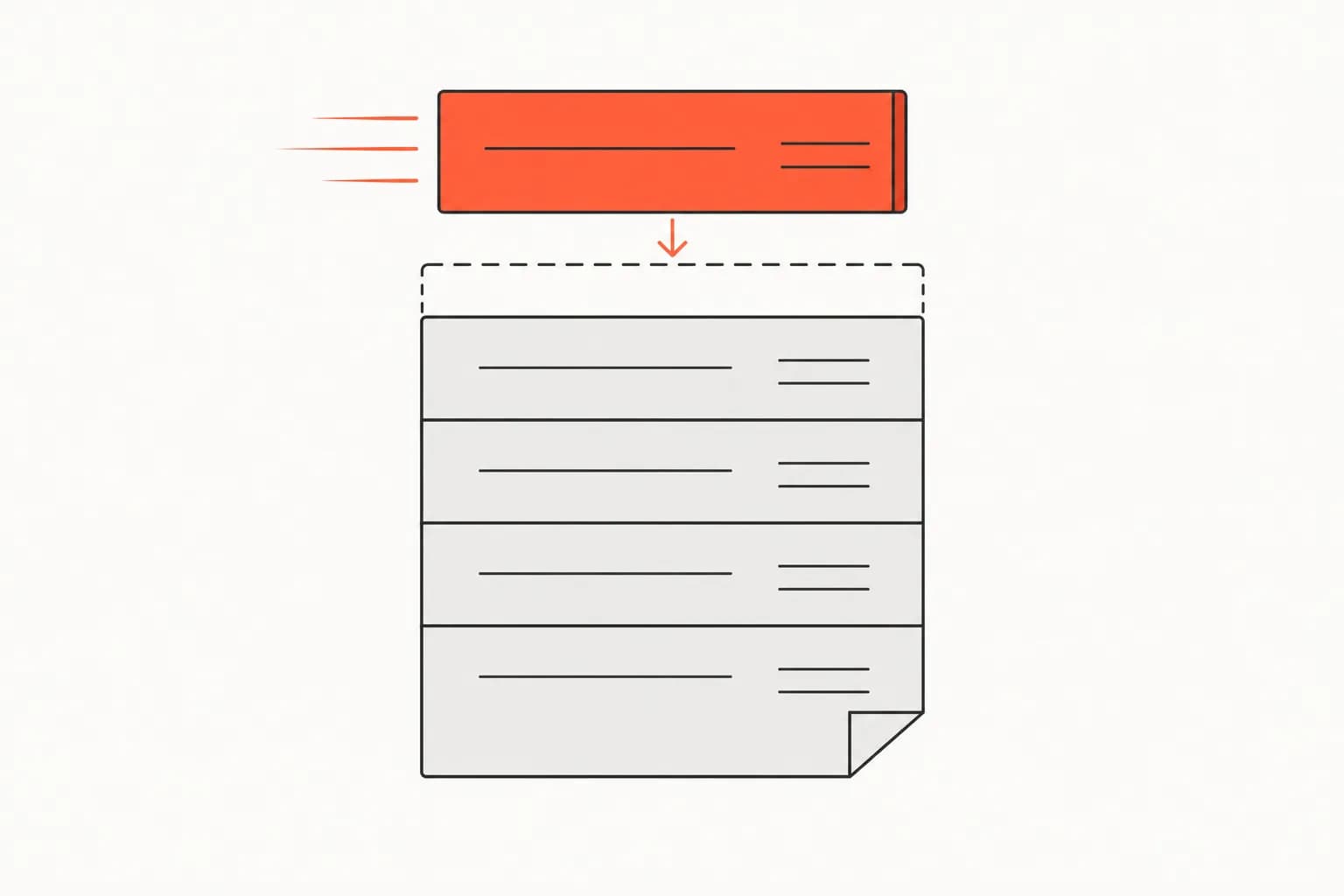
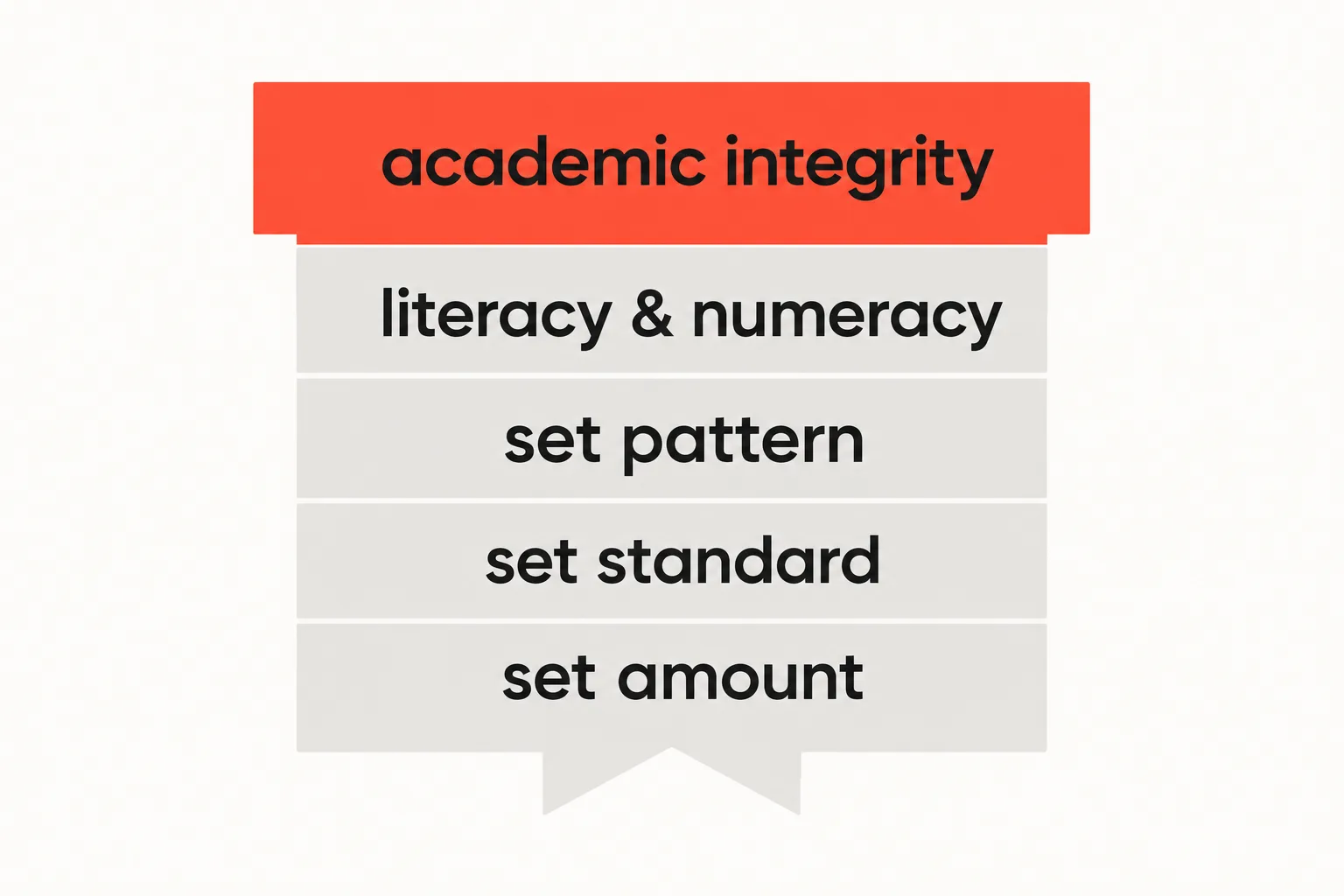
A QCE is awarded when you achieve a set amount of learning, at a set standard, in a set pattern, while meeting the literacy and numeracy requirements and the academic integrity requirement. Five conditions, and the last one is the new arrival.
- Set amount — 20 credits from your learning options.
- Set standard — satisfactory completion, a grade of C or better, competency or qualification completion, or a pass or equivalent.
- Set pattern — 12 credits from completed Core courses of study, plus 8 from any combination of Core, Preparatory (maximum 4) and Complementary (maximum 8).
- Literacy and numeracy — met through one of the available learning options.
- Academic integrity — one of the three course options above.
The first four are cumulative and take two years. The fifth takes an hour. It is the cheapest requirement on the list and the easiest one to forget, which is exactly the combination that produces a certification problem in December.
What the course actually covers
The online course develops three things: what academic integrity is and why it matters, what academic misconduct is and how to avoid it, and how to build effective academic practices. Under that third heading sit the two ideas the whole requirement exists for — accurately representing contributions from other sources, including collaboration and content created by AI tools, and making sure everything you submit for assessment is original.
A school-run equivalent has to go wider. QCAA lists what such a course must cover, and the list reads like a description of the habits that keep a student out of trouble in the first place:
- Time management and forward planning.
- Sourcing appropriate information.
- Ensuring work is original.
- Ethical and responsible use of AI tools.
- Accurately representing contributions or ideas from other sources, including collaboration and AI-generated content.
- Appropriate referencing.
- Drafting and editing skills.
Note what is not on that list: nothing about detection software, and nothing about proving your innocence. The requirement is framed entirely around practice, which is a better signal about how integrity questions are actually resolved than anything a probability score will tell you. If you have been worried about that side of it, the piece on why AI detectors flag real student writing covers what those tools do and do not measure.
The eleven types of academic misconduct
The QCE and QCIA handbook names eleven categories of academic misconduct, with examples, and says plainly that the list is not exhaustive. Most students can name two or three. Here is the full set.
| Type | What it covers |
|---|---|
| Cheating under supervised conditions | Writing during perusal or after time is called, unauthorised equipment, materials or AI, notes on your body or clothing, communicating with anyone but a supervisor. |
| Collusion | More than one student producing a response that is submitted as individual work, helping another student commit misconduct, or giving or receiving a response. |
| Contract cheating | Paying a person or service to complete a response, or selling or trading one. |
| Copying work | Making it possible for another student to copy, looking at another student's work, or copying it during a supervised assessment. |
| Disclosing or receiving assessment information | Giving or accessing unauthorised information such as stimulus or suggested responses before an assessment is completed. |
| Fabricating | Inventing or exaggerating data, or listing incorrect or fictitious references, including false or misleading information generated by AI. |
| Impersonation | Arranging for another person or technology to complete a response in your place, or completing one in place of another student. |
| Misconduct during a supervised assessment | Distracting or disrupting others in an assessment room. |
| Plagiarism or lack of referencing | Copying or altering another person's work, creating work with AI without attribution, or using a translator, because the output is not your work. |
| Self-plagiarism | Re-submitting work, or part of it, that you already submitted for another assessment in the same or any other subject. |
| Significant contribution of help | A tutor, parent, carer or anyone in a supporting role completing or contributing significantly to your response. |
Schools manage the consequences for internal assessment through their own assessment policy, so what happens after a finding is a school matter rather than a single statewide penalty. That is why your school's assessment policy is worth reading once, early, while it is an abstract document rather than one being applied to you.
The four that catch honest students
Seven of the eleven describe someone deciding to cheat. Four describe things a hardworking student does without recognising the line, and they are the reason this course exists.
Fabricated references
Listing incorrect or fictitious references, including false or misleading information generated by AI.
How it happens: you ask a chatbot for sources, it invents plausible ones, and you paste them into a bibliography without opening a single one. Every reference in your list should be a document you have actually looked at.
AI without attribution
Creating work using AI and not providing attribution, whether that is text, images, figures, tables, information or ideas.
How it happens: the tool rewrote a paragraph and the paragraph felt like yours afterwards. Attribution is not an admission of wrongdoing; failing to attribute is what makes it misconduct.
Self-plagiarism
Duplicating work, or part of work, already submitted for an assessment in the same or any other subject.
How it happens: two subjects set overlapping topics and you reuse your own analysis. It is your writing, which is precisely why the rule surprises people. Start again.
Significant contribution of help
A tutor, parent, carer or other supporter completing or contributing significantly to a response.
How it happens: a tutor moves from explaining the criterion to restructuring your paragraphs. Help that improves your understanding is fine. Help that improves the artefact without you is not.
The line running through all four is authorship. Feedback, teaching, tutoring and tools can all shape how you think about a draft; the words that get marked have to be yours. That distinction is the same one behind your school's drafting rules, which is why drafting properly and staying inside the integrity rules turn out to be the same discipline.
One practical note that gets missed: your school decides which referencing style you use and is required to teach it explicitly. If nobody has told you whether it is APA, Harvard or something else, ask. Referencing incorrectly because you were never taught the style is still recorded as plagiarism or lack of referencing.
How to check whether you have done it
Your learning account is the record that counts. If you completed the online course, the completion was written there automatically. If your school ran the alternative format or an equivalent program, a staff member had to enter it, and an entry that was never made looks identical to a course you never did.
Sign in to the myQCE Student Portal
The same portal that holds your learning account and your results. If you cannot get in, the portal's own frequently asked questions cover the common login problems.
Look at your learning account
Completion of the academic integrity course appears there. If you did the online version, it should already be showing.
If it is missing, ask your school
School-delivered options are recorded by the school in the QCAA Portal, so a missing record is a school administrative matter. Ask before your final year is being certified, not during.
Key takeaways
The requirement is small, mandatory and easy to satisfy, and the material behind it is more useful than the hour suggests.
| Point | Details |
|---|---|
| It is a QCE condition | From 2026, Year 12 graduates must complete an academic integrity course to be eligible for a QCE, alongside credits, standard, pattern, and literacy and numeracy. |
| The cutoff is August 2026 | Students who finished, or were scheduled to finish, Year 12 before August 2026 are exempt. |
| Three ways to meet it | The QCAA online course, the same course in an alternative school-delivered format, or an equivalent course approved by your principal. |
| One hour, self-paced | The online course runs about an hour through the myQCE Student Portal, and completion records itself in your learning account. |
| Eleven types of misconduct | The handbook names eleven, and four of them — fabricated references, unattributed AI, self-plagiarism and excessive help — catch students who were not trying to cheat. |
The hour I would have skipped
If someone had handed me a compulsory online integrity module in Year 11, I would have clicked through it in twenty minutes and remembered none of it. That is the honest failure mode of this kind of requirement, and pretending otherwise helps nobody.
What changed my mind was reading the misconduct table properly. I had reused a chunk of my own writing across two subjects once and thought nothing of it, because it was mine. It is on the list. So is handing a tutor a paragraph and getting back a better paragraph, which I had also done, and which I had filed under getting help.
Neither of those came from wanting to cheat. They came from not knowing where the line was drawn, which is the specific gap an hour of scenarios and quizzes is quite well suited to closing. Do the hour early, read the eleven categories once, and the rest of senior is a lot less ambiguous.
Feedback that keeps the work yours
Integrity rules do not stop you getting feedback; they define whose words end up on the page. ISMGenius reads your own draft against your task's ISMG and tells you where each criterion sits and what is missing, criterion by criterion. It does not write the assignment, and it does not hand you paragraphs to paste in. The revision is yours, which is the whole point of the requirement you are being asked to complete.
You can check a draft against your ISMG before you submit, read where the line sits on AI use and academic integrity, or look up an unfamiliar term in the QCAA senior assessment glossary. The requirement itself is set out by QCAA on its academic integrity requirement page, and the misconduct categories come from section 8.1 of the QCE and QCIA handbook. The full eligibility rules sit on the QCE eligibility and requirements page.