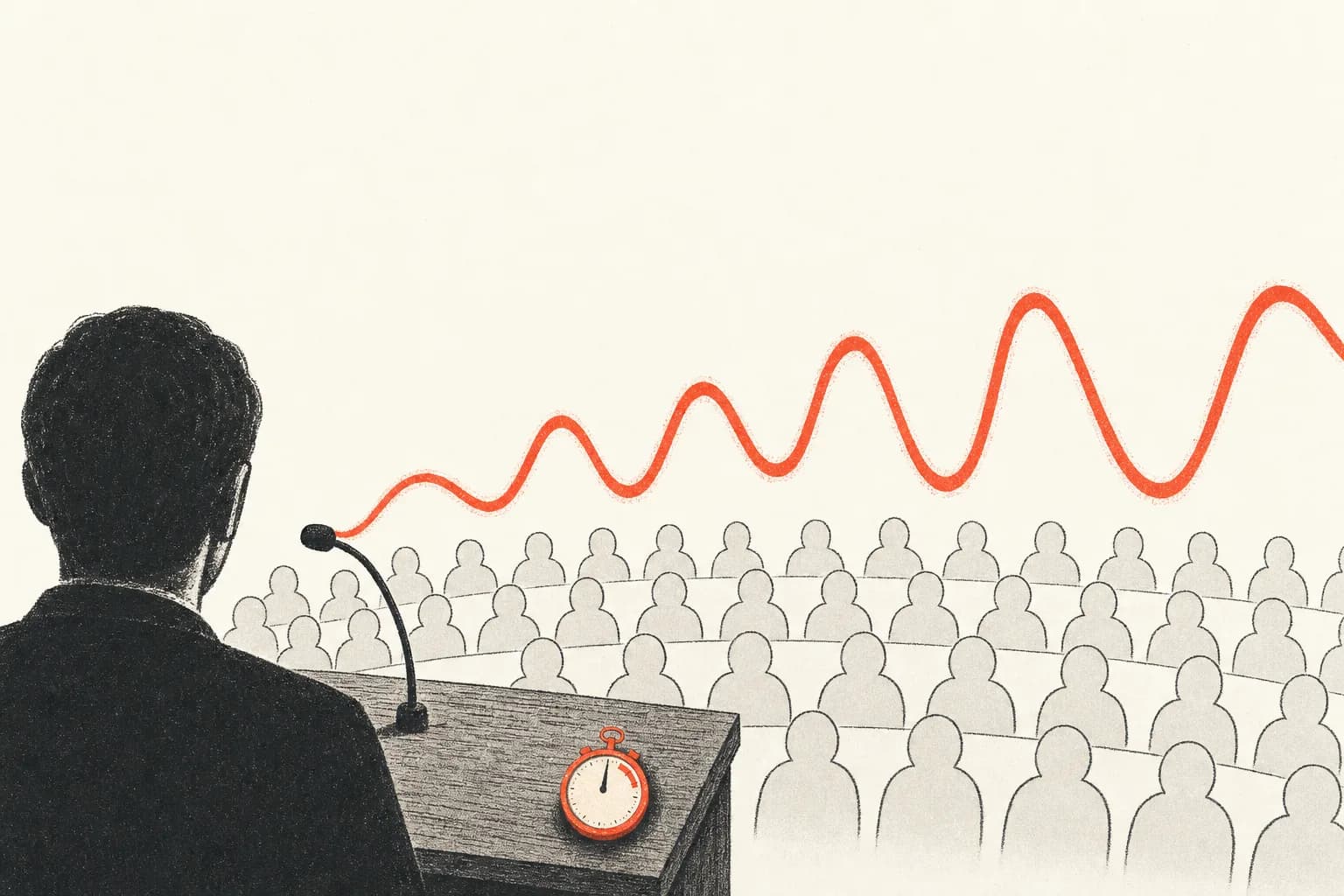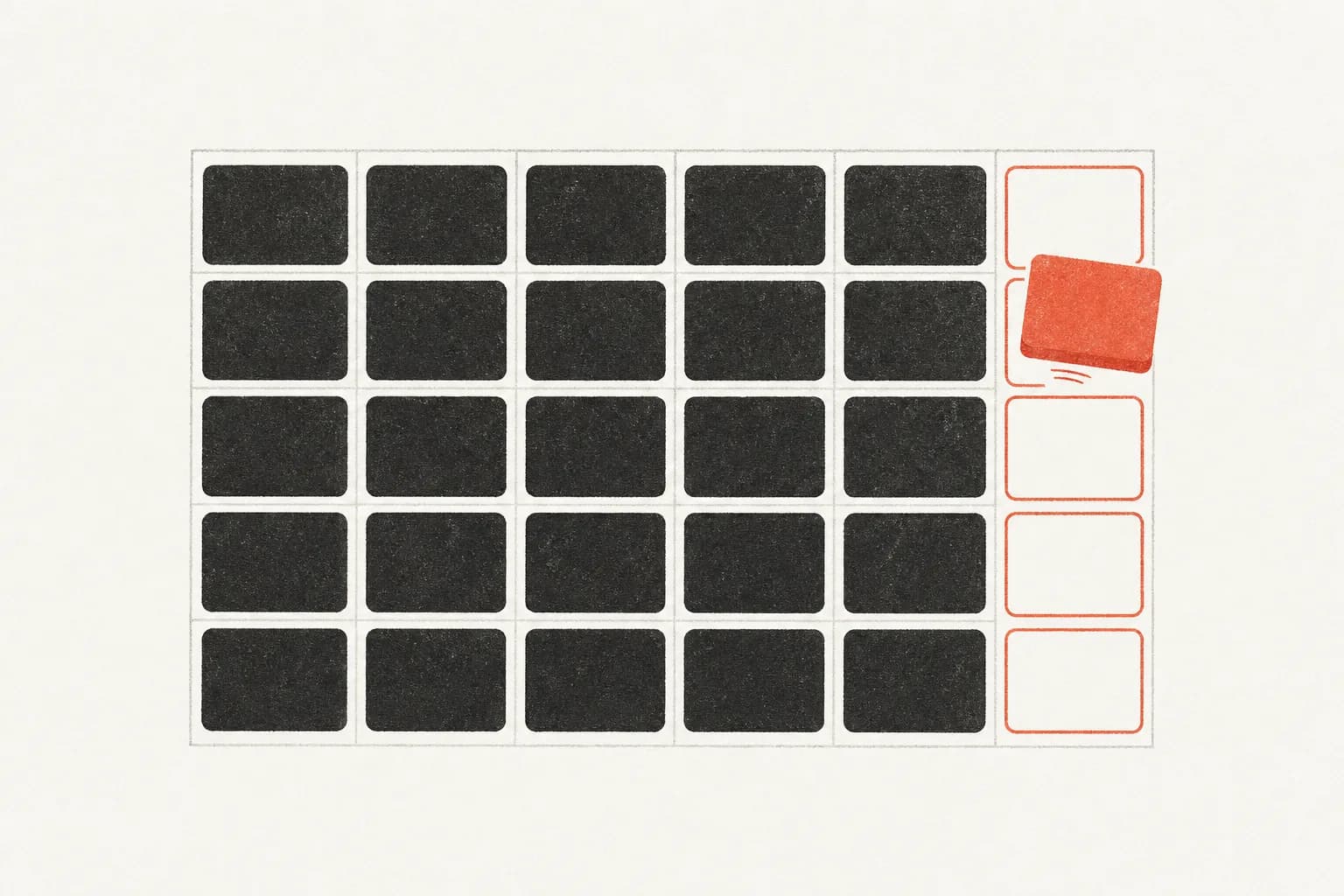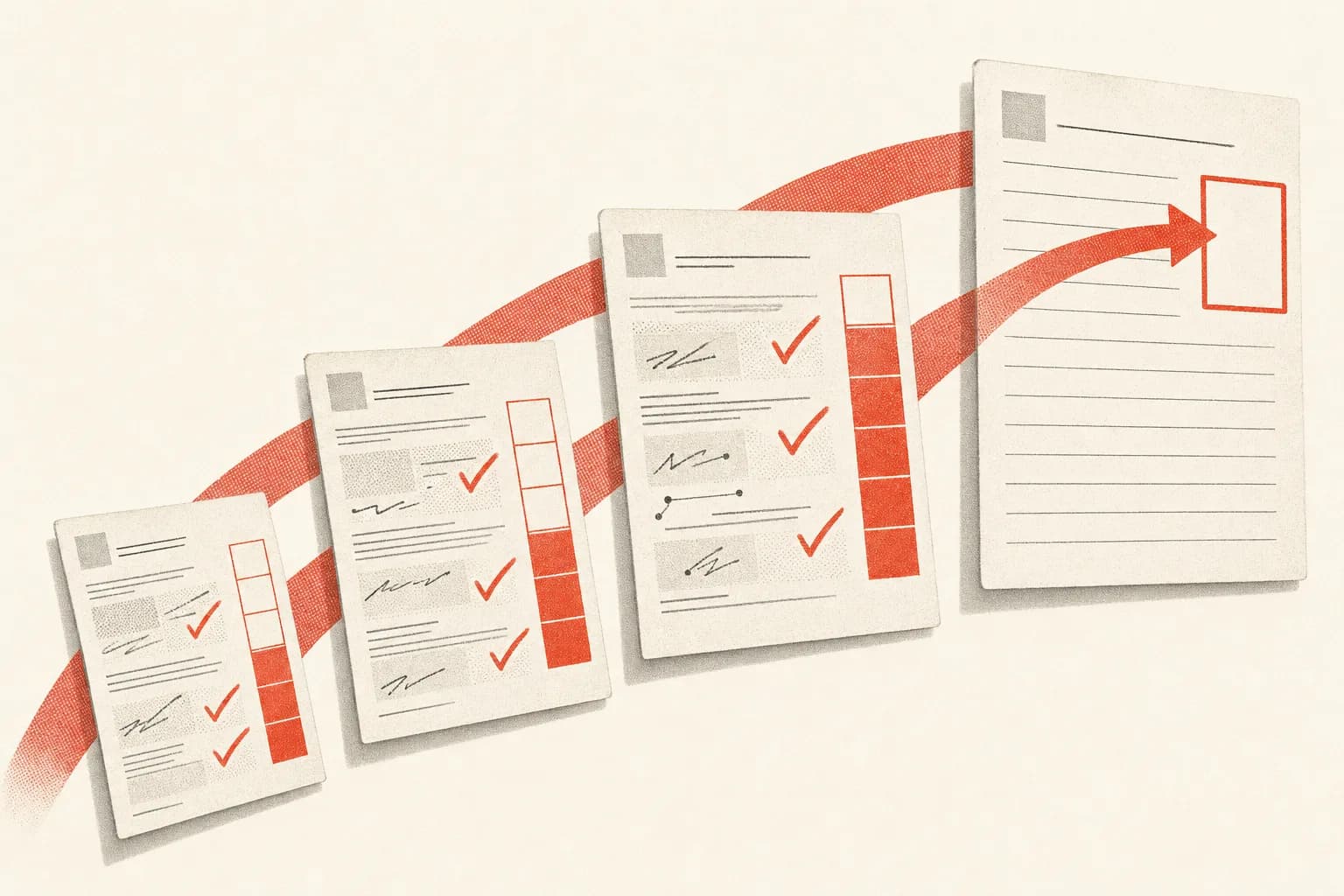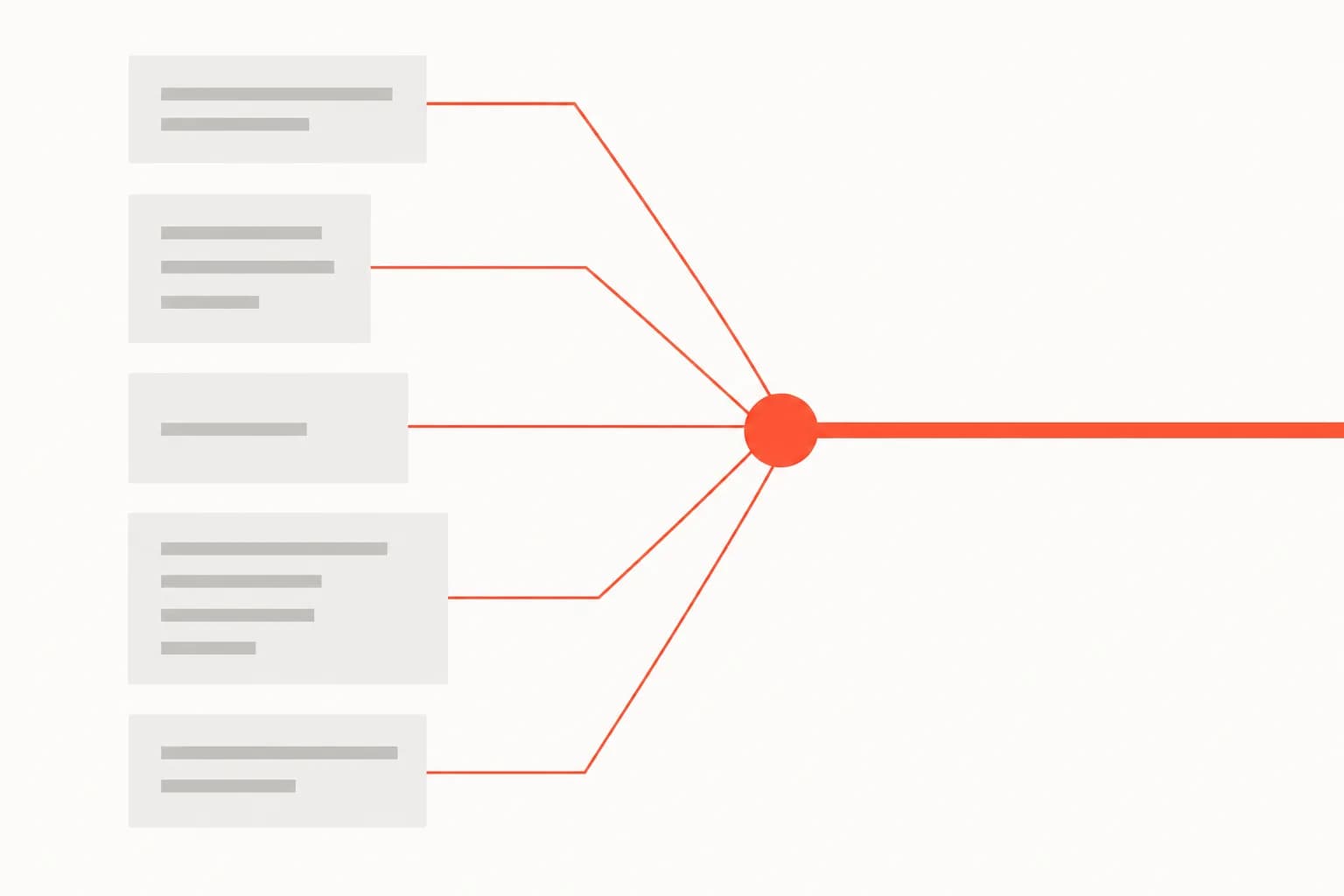
Two key inquiry questions for the same Modern History investigation. First: "How significant was propaganda in Nazi Germany?" Second: "To what extent did Nazi propaganda between 1933 and 1939 reinforce existing German attitudes rather than create new ones?" Only the second can be answered with four to six sources in 2000 words, and only the second gives you a position an argument can defend. The criterion that pays for that difference is worth 5 marks. The criteria depending on it are worth the other 20.
Two investigations, half your subject result
Modern History and Ancient History are built the same way: an examination at IA1, an Investigation at IA2, another Investigation at IA3, and an external examination. Each is worth 25 marks. A General subject result is reported out of 100, so those percentages are the marks.
Half of everything you are marked on in either history is written at home, against a rubric you may hold in your hand. The two are not the same task, though: IA2 is an independent source investigation from Unit 3, and IA3 is a historical essay based on research from Unit 4.
There is no single humanities ISMG
In the sciences, one instrument-specific marking guide covers all seven subjects that run the research investigation, so writing to it transfers between them unchanged. Humanities does not work that way. The word "investigation" appears on instruments with different names, criteria and mark splits, so a guide written for one subject will quietly mislead you in another.
| Subject | IA2 | IA3 |
|---|---|---|
| Modern History | Investigation — 25 | Investigation — 25 |
| Ancient History | Investigation — 25 | Investigation — 25 |
| Legal Studies | Investigation — inquiry report — 25 | Investigation — analytical essay — 25 |
| Study of Religion | Investigation — inquiry response — 25 | Investigation — inquiry response — 25 |
| Economics | Investigation — 25 | Examination — extended response — 25 |
| Geography | Field report — 25 | Data report — 25 |
| Business | Business report — 25 | Feasibility report — 25 |
What transfers is the craft: framing a question narrow enough to answer, selecting evidence instead of collecting it, judging that evidence out loud, and combining it into one argument. Every rubric below rewards those four moves under different names, which is why reading your own ISMG first matters more here than anywhere else.
The inquiry question decides the rest
Both history ISMGs put the question first, in a criterion called Devising and Conducting. The top band wants a nuanced key inquiry question, relevant sub-questions, and discerning selection of relevant evidence. A question that merely exists sits at the bottom: the wording for 1 mark is that the response "includes a key inquiry question and/or sub-questions".
Caps low
"What caused the fall of the Roman Republic?"
Nuanced
"To what extent do Cicero's letters and Sallust's account disagree about the role of Senate corruption in the fall of the Roman Republic, and which is the more reliable guide?"
The second version names the sources it will interrogate, so evidence selection is already scoped. It builds disagreement in, so there is something to argue. And it asks for a judgment about reliability, which is the Evaluating criterion handed to you in advance. A good question is a plan for the other four criteria.
That 1200-to-650 split is a warning. Most of your words go to the interrogation, but the argument still has to arrive. Students who write 1600 words of source commentary and 250 of summary lose marks in Synthesising, not Analysing.
History: where Synthesising is the ceiling
The two history investigations use different criteria. IA2 splits its 25 marks evenly across five worth 5 each: Devising and Conducting, Analysing, Evaluating, Synthesising and Communicating. IA3 adds a sixth, Comprehending, and reweights the rest.
- Synthesising5 marks
- Devising and Conducting4 marks
- Comprehending4 marks
- Analysing4 marks
- Evaluating4 marks
- Communicating4 marks
Synthesising is the only criterion still worth 5 in IA3, and it is the one students most often leave implied. Its top band asks for a "sophisticated historical argument that skilfully combines evidence from historical sources to justify decisions". The load-bearing word is combines. Evidence dealt with source by source, in the order you found it, is not combined.
Suetonius presents the reforms as personal ambition, while the surviving inscriptions record them as routine administration. Read together, the gap suggests the reforms were unremarkable at the time and became evidence of ambition only once the outcome was known, which is why the literary account cannot be treated as contemporary testimony.
Why this scores: Two sources are set against each other and a third claim emerges that neither contains alone. The reliability judgment is earned by the comparison, not asserted before it.
Evaluating wants "discerning and well-reasoned judgments about the usefulness and reliability of evidence". Lower bands accept usefulness and/or reliability. If you only ever discuss whether a source is biased, you are answering half the criterion.
Legal Studies: the marks are not even
Legal Studies runs an Investigation — inquiry report at IA2, on an issue requiring reform to Australian or Queensland legislation, and an Investigation — analytical essay at IA3, on an international human rights issue and Australia's response to it. Both are up to 2000 words and use the same five criteria.
- Analysing6 marks
- Evaluating6 marks
- Comprehending5 marks
- Selecting4 marks
- Creating a response4 marks
Twelve of the 25 marks sit in Analysing and Evaluating, and both ask for more than the verbs suggest. Analysing wants legal information interpreted so that different relevant viewpoints and their consequences are examined. Evaluating wants alternatives drawn out of the analysis, a recommendation justified through the discerning use of legal criteria, and a discussion of its implications. A report that describes a problem then recommends a fix has skipped two thirds of a 6-mark criterion.
Selecting is worth only 4 marks and is the cheapest to secure: current, relevant legal information from primary or secondary sources, plus consistent and accurate citations and a reference list. Referencing is inside this rubric.
Study of Religion: a hypothesis, not a question
Study of Religion runs two instruments both named Investigation — inquiry response, at IA2 and IA3, each worth 25 marks and written as an analytical essay of up to 2000 words. The criteria and weights are identical.
- Analysing7 marks
- Evaluating7 marks
- Explaining6 marks
- Communicating5 marks
The framing device differs from history. Both tasks require you to devise a hypothesis for the focus of the inquiry, not a key inquiry question. A hypothesis commits you to a claim on page one, which makes the essay a test rather than a tour. The top band of Evaluating asks for a "thorough and succinct synthesis of ideas", discerning judgments about significance and influence, and detailed justification of them. Synthesis and judgment share one criterion, so a conclusion that gathers ideas without ranking them will not reach it.
Geography, Business and Economics
These three run investigation-shaped tasks under other names, and their ISMGs are not interchangeable with the ones above.
- Geography marks a Field report at IA2 and a Data report at IA3, each out of 25. Both give 10 marks to one combined criterion, Analysing and Applying, alongside Explaining and Comprehending, Proposing action, and Communicating — though the other 15 are split differently between the two.
- Business marks a Business report at IA2 and a Feasibility report at IA3, each out of 25, using the same five criteria both times: Describing 4, Explaining 4, Analysing 7, Evaluating 7, Communicating 3.
- Economics runs one Investigation, at IA2, worth 25 marks across Comprehending 6, Analysing 8, Evaluating 7 and Creating a response 4. IA3 is an examination, so there is no second research task to recover on.
What actually transfers
- Write the question or hypothesis so narrowly that a wrong answer is possible. If nothing could disprove it, nothing can argue for it either.
- Select sources rather than accumulate them. Four genuinely interrogated beat nine summarised, and several of these subjects cap the number on purpose.
- Judge the evidence in the body, not in a closing paragraph labelled "limitations". Usefulness and reliability are separate judgments in history; consequences and implications are separate in Legal Studies.
- Make the sources meet. Synthesis means a claim that emerges from two pieces of evidence read together, which neither states alone.
The verbs doing the work here — analyse, evaluate, synthesise, justify — have fixed QCAA definitions that hold across every subject. If any feels vague, the cognitive verb guide is the fastest way to pin it down before you draft.
Why I plan the argument before the sources
The first history investigation I wrote had eleven sources and no position. The critical summary read like a list of things I had found, because that is what it was: it analysed well and synthesised badly. What changed was drafting the argument I expected to make before I finished reading — not to force the evidence towards it, but to know what I was testing, so every source could be asked the same question.
Check your investigation with ISMGenius
ISMGenius reads your draft against your task's own ISMG and shows you, criterion by criterion, which band your inquiry question, source evaluation and argument reach, with the descriptor wording behind each. It is an informed estimate to guide revision, not your official grade, and it never writes the work for you — which keeps you inside the academic integrity rules.
You can run a draft through ISMGenius, check the assessment structure of your own subjects on the QCAA subject pages, and see how these 25-mark instruments add up on the subject result calculator. The syllabuses themselves are published on the QCAA humanities and social sciences subject pages.